
Iron roofs present unique challenges. From corrosion to leaks, maintaining an iron roof requires a specific approach to keep it performing well for decades.
In this guide, we’ll cover everything you need to know about iron roof repair — from common problems to professional repair strategies — so you can extend your roof’s life and avoid unnecessary costs. Whether your building has a classic corrugated iron roof or a flat sheet design, these insights will help you make smarter decisions about maintenance and restoration.
Common iron roofing problems that need to be rectified
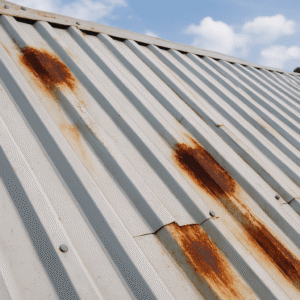
Iron roofs are tough but not immune to the elements. They face some unique challenges compared to other roofing materials.
- Rust and corrosion — Iron is highly prone to rust if coatings degrade
- Leaks around fasteners and seams — Iron expands and contracts more than many other roofing materials, especially in high heat, which can lead to fasteners working loose over time, holes widening around fasteners, and water infiltration or panel shifting (all of which can occur even before visible water damage appears)
- Panel warping — Temperature fluctuations cause metal to expand and contract, which can warp panels
- Paint degradation — UV exposure and harsh weather conditions can wear away protective coatings
- Material incompatibility — If galvanized steel or copper flashings are installed directly against iron roofing panels, it can cause electrochemical reactions that speed up corrosion — especially in humid or coastal environments
Compared to steel roofs, iron roofing is more vulnerable to rust and typically requires more frequent repainting and recoating.
Consequences of ignoring minor issues
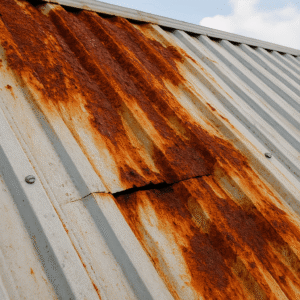
What starts as a small spot of rust or a barely visible drip can quickly spiral into a much larger problem if left unchecked. Ignoring minor issues in your iron roof doesn’t just shorten the roof’s lifespan — it can lead to serious structural damage, safety hazards, and skyrocketing repair costs. For commercial properties, even a small roof failure can disrupt operations, damage inventory, and trigger insurance complications. Here are just some of the consequences of ignoring minor issues:
- Small rust spots can spread and create major structural weaknesses
- Minor leaks can escalate into serious water damage, mold growth, and insulation issues
- Fastener problems can lead to panels loosening or detaching, posing safety hazards (and this is especially problematic during hurricane season)
Prompt repairs are always important for protecting both the roof structure and the building below, but they’re perhaps most important when the roof is made from iron. And addressing problems early is always the more cost-effective and less disruptive path.
What every commercial building owner and manager should know about iron roof repairs
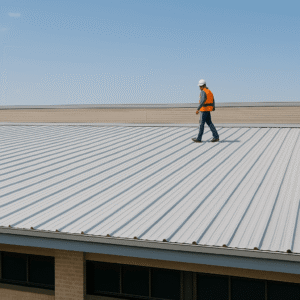
Iron roof repairs can range from quick spot treatments to full panel replacements — and knowing which method to use (and when) can dramatically reduce long-term costs. Whether you manage a classic corrugated iron roof or a flat-sheet structure, the principles are the same: address damage early, use the right materials, and ensure repairs are properly applied for maximum durability.
Common types of iron roof repairs
Commercial iron roofing can be repaired in several ways, depending on the extent and location of the damage. Here are the most common techniques used by experienced professionals:
- Rust treatment — Surface rust is removed, the metal is primed with a rust-inhibiting agent, and then sealed with a high-quality coating to prevent recurrence
- Leak sealing — Joints, seams, and fastener holes are patched or sealed using roofing-grade sealants designed for iron
- Panel replacement — Severely corroded or warped panels are cut out and replaced with new ones, then sealed and coated to match the surrounding roof
- Protective recoating — A full surface coating is applied to protect against UV rays, moisture, and future corrosion
Each of these repair types plays a role in preserving roof performance — and combining them as part of a strategic maintenance plan is often the most cost-effective approach.
Best practices for treating rusted iron roofs
Rust is the number one threat to iron roofs, and treating it thoroughly is key to extending the life of your roof.
- Start by removing all visible rust using a wire brush, power grinder, or sandblasting, depending on the severity
- Apply a rust-inhibiting primer to prepare the surface for coating
- Finish with a durable iron roof coating designed for long-term protection, such as an acrylic or elastomeric product — we recommend Conklin’s range of roof coatings as they’re not only effective and great value for money, they also come with up to 20-year warranties, effectively extending the life of your roof by up to 20 years (depending on the exact coating chosen)
Skipping any of these steps can lead to premature coating failure and recurring rust problems.
Unique considerations when repairing corrugated iron roofs
Corrugated iron roofing presents its own set of challenges due to its curved surface. Repairs must account for the increased surface area and vulnerability of fasteners and seams.
Key considerations include:
- Rust and leaks tend to collect in the troughs and seams of corrugations, making thorough surface prep essential
- Sealants and coatings must be flexible enough to adhere to the uneven surface and resist cracking over time
- Fasteners often need resealing or replacing to maintain water tightness and structural integrity
Restoring the appearance and protection of a corrugated iron roof requires both the right timing and the right products.
- Use elastomeric or acrylic coatings specifically formulated for metal roofs — formulations specific to iron roofs are even better
- Ensure thorough adhesion, particularly along seams and around fasteners
- Apply coatings in dry, mild weather to allow for proper curing and adhesion
This process not only improves energy efficiency and appearance — it also adds years to your roof’s lifespan.
Repairing holes in iron roofing
Punctures in iron roofing can be successfully repaired if addressed early. The proper repair process includes:
- Cleaning the affected area to remove rust, debris, and loose paint
- Applying a metal patch with roofing-grade sealant, then fastening it securely to the surface
- Finishing with a protective coating to ensure long-term durability and a weatherproof seal
Iron vs. steel roof repairs: Key differences
We often get asked whether iron and steel roofs are repaired using identical procedures. Though iron and steel roofs may appear similar, the repair approach can differ significantly.
- Iron roofs are more susceptible to rust and generally require more aggressive surface preparation and thicker, rust-resistant coatings
- Steel roofs, especially galvanized or coated varieties, tend to resist corrosion better and often require repairs focused more on physical damage than chemical degradation
Material compatibility also matters when selecting coatings — what works for steel may not offer enough protection for aging iron panels.
Understanding these differences is essential when planning repairs or comparing quotes from contractors. A repair strategy designed for steel won’t offer the same protection when applied to an iron roof — and could lead to faster deterioration.
The role of protective coatings in iron roof restoration
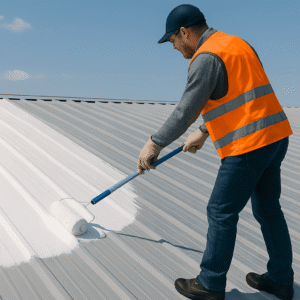
If your roof is showing signs of wear but hasn’t reached the point of full replacement, restoration with a protective coating may be the smartest move you can make. A well-executed restoration doesn’t just extend the lifespan of your roof — it can prevent costly future repairs, improve energy efficiency, and significantly reduce your overall roofing costs over time.
Why protective coatings are a useful tool in extending the life of your roof
Protective coatings form a barrier between your iron roof and the elements. They seal out moisture, reflect damaging UV rays the their attendant heat, and protect vulnerable areas like seams, fasteners, and panel edges — all while enhancing the roof’s appearance.
Done properly, a roof restoration using high-performance coatings can extend the life of your roof by up to 20 years. That means a fraction of the cost of replacement, with minimal disruption to your operations.
Key benefits of iron roof coatings
For commercial iron roofs, coatings offer three big advantages:
- Rust prevention — Quality coatings stop new rust from forming and help slow the progression of existing corrosion
- Energy efficiency — Reflective coatings reduce thermal absorption, which can lower cooling costs and create more comfortable interior conditions
- Leak protection — Coatings seal small cracks, seams, and fastener points to prevent water intrusion before it starts
These benefits are especially valuable in Florida’s hot, humid, and storm-prone climate.
Choosing the right coating product
Not all coatings are created equal. The best choice depends on your building’s location, roof design, and the current condition of the iron.
- Conklin roof coatings — A top choice for commercial buildings, Conklin coatings are waterproof, energy-efficient, and backed by warranties of up to 20 years. They’re highly durable and excellent for reflective, long-term performance. While Conklin offers a range of coatings, these are the top choices for iron roofs:
- Acrylic elastomeric coatings — Flexible, UV-resistant, and ideal for reducing energy costs. Best suited to iron roofs in sunny or hot regions and positions.
- Silicone coatings — Superior waterproofing performance and strong resistance to ponding water. They’re typically less reflective than acrylics but are a better option for flat or low-slope roofs.
A professional contractor can help match the coating to your roof’s needs and ensure it meets any manufacturer warranty requirements.
Common challenges with iron roof coating
Coating an iron roof successfully requires more than just picking the right product. Without the right prep and conditions, even the best coating can fail prematurely.
Here’s what to keep in mind:
- Surface preparation is critical — All rust must be removed before applying the coating. Any residue left behind will compromise adhesion. For a successful and long-lasting application, you therefore need a roofing contractor with excellent attention to detail.
- Product compatibility matters — Your chosen coating must be chemically compatible with any existing treatments or materials on the roof.
- Weather conditions must be ideal — Coatings should only be applied in dry, mild weather to ensure proper curing and long-term performance. The weather is generally warm enough in Florida all year round, but you may find it more challenging to find a dry day during storm season, so try to book in your roof restoration before then.
Skipping these steps can lead to blistering, peeling, or water intrusion, so always work with a qualified and experienced commercial roofing contractor for coating projects.
Safety and Regulatory Considerations for Iron Roof Repairs in Florida
Repairing or restoring an iron roof isn’t just a matter of technical expertise — it also involves serious safety precautions and compliance with state and local regulations. In Florida, where heat, height, and hurricane season all increase the stakes, it’s essential to work with professionals who understand the risks and know how to navigate the rules.
Permits and building code requirements
Depending on the scope of your roof repair project, you may need a permit — especially if the work involves structural changes or exceeds a certain percentage of the roof’s surface area. Under Florida Building Code regulations, for example, if more than 25% of a roof is repaired or replaced within a 12-month period, the entire roofing system may need to be brought into compliance with current code standards. This can have significant implications for older commercial buildings.
At the time of writing, Florida’s Building Code is in a state of flux and the regulations may be updated again in the near future. So, always check with your local building department before beginning any major repair work. A qualified contractor should be able to manage the permitting process on your behalf and ensure all materials and methods meet Florida’s regulations.
On-site safety precautions
Iron roofs, particularly those with corrosion or aging panels, present a unique set of safety challenges — especially for multi-story commercial properties. Falls remain one of the leading causes of job-site injuries in roofing, which is why strict adherence to OSHA standards is non-negotiable.
At a minimum, your contractor should:
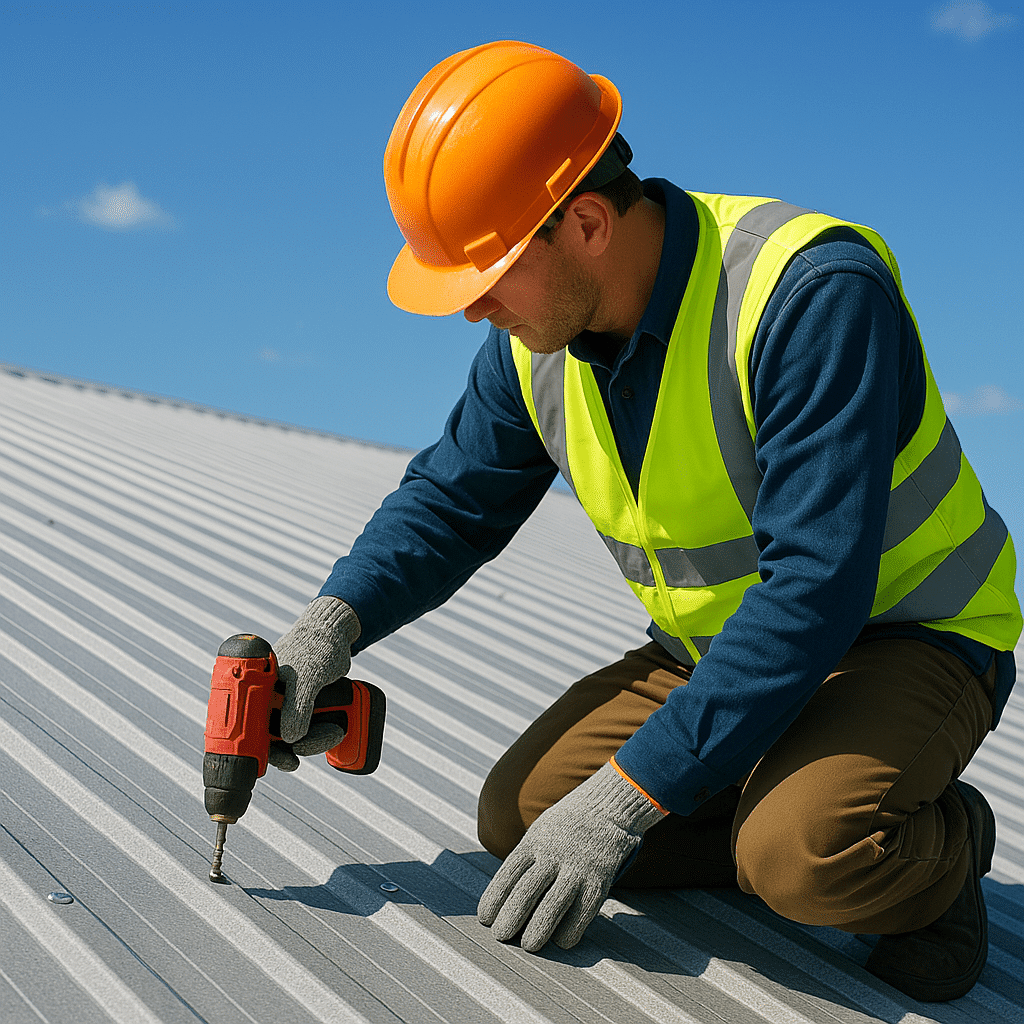
- Use fall protection equipment such as harnesses, lifelines, and guardrails
- Wear appropriate personal protective equipment (PPE), including gloves, safety glasses, and non-slip boots
- Avoid walking on weakened, rusted, or unsupported sections of the roof
A professional roofing crew should also conduct a pre-inspection to assess structural integrity before any work begins.
Contractor qualifications and certifications
In Florida’s roofing industry — where tropical storms and high UV exposure demand more from roofing systems — experience matters.
Before hiring anyone to repair your iron roof, confirm the following:
- The contractor is licensed and insured in the state of Florida
- Their team is trained in metal roofing systems, including safe work practices for elevated, exposed, or corroded structures
- They have manufacturer-specific certifications, such as being a Conklin-certified installer, which can help preserve product warranties and ensure coatings are applied correctly
Hiring a contractor with these qualifications not only protects your building — it also protects your investment by ensuring compliance, workmanship quality, and long-term performance.
Residential vs. commercial iron roof repairs
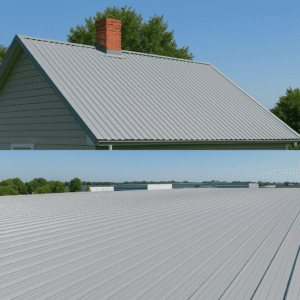
If you’ve had an iron roof repaired on your home, you’ll find commercial iron roofing involves more complexity.
Key differences
- Size and scale — Commercial roofs are larger and often flat or low-slope, requiring different repair strategies
- Design and material differences — Commercial buildings may use heavier-gauge iron panels or specialized coatings
- Access challenges — Larger, higher commercial roofs require more specialized equipment and safety planning
Understanding these differences helps you better appreciate why commercial iron roof repairs often involve more time, labor, and technical expertise.
Choosing professional help and estimating costs
Hiring a reputable iron roofing company ensures your repairs are done safely and correctly. They’ll also be able to give you an accurate estimate of your likely costs. However, here are some guiding factors to consider.
Factors influencing the cost
- Extent of damage (surface rust vs structural issues)
- Size and complexity of the roof
- Type of repair materials and coatings needed
- Labor costs based on access and safety requirements
Iron roof replacement costs are significantly higher than repair costs — making timely repairs a smart financial move. You might be tempted to try to repair your roof yourself to save even more money. However, most DIY jobs end up failing early, resulting in more repairs and costs down the track.
Advantages of using professional services
- Correct diagnosis of issues before they become costly problems
- Access to high-quality materials and coatings
- Workmanship warranties that protect your investment
- Repairs and maintenance that meets insurance requirements
How to choose the right company
- Look for a company specializing in iron roofing or metal roof restoration
- Check references, reviews, and licensing
- Ask about the coatings and materials they recommend and use
3 Questions to ask before hiring an iron roof repair contractor
To ensure your contractor meets the above requirements, consider asking prospective companies these questions:
- Are you licensed and insured in the state of Florida?
This protects you from liability and ensures the contractor is familiar with Florida Building Code and permitting requirements.
- Do you have experience with commercial iron roof systems?
Iron roofs have unique maintenance and restoration needs. Make sure your contractor understands rust control, coating compatibility, and safety protocols specific to large-scale metal roofing.
- Are you certified to install high-performance coatings like Conklin?
Manufacturer certification helps protect your warranty and guarantees the product will be applied to spec — ensuring maximum lifespan and performance.
Protect your investment with timely iron roof repairs
Your iron roof is tough — but it needs smart maintenance and timely repairs to stay that way. Regular inspections, professional repairs, and protective coatings are the keys to extending your roof’s life and saving money over the long term.
Need expert help with your iron roof? Contact our trusted iron roofing specialists today for a free inspection and repair estimate. Protect your property and your budget with Troyer Commercial Roofing’s professional services!