

When a hurricane damages your commercial roof, what you do in the first few days matters. Water that gets in now becomes wet insulation, damaged ceilings, and mold later. These are the steps we walk building owners through after a storm.
9 steps after hurricane damage to a commercial roof
1. Make sure the building is safe
Before anyone goes inside, check for structural damage, exposed wiring, and loose debris. If the roof looks unstable or part of the building is compromised, keep people out and call a professional. Don’t send staff onto a storm-damaged roof.
2. Document everything
From the ground and from inside, photograph and video every sign of damage: missing or torn roofing, debris, leaks, and water stains. Note the date and time. Do this before any cleanup or temporary repairs.
3. Check the interior for water
Look for ceiling stains, dripping, wet insulation, and peeling paint. A roof can look intact from the street and still be leaking. Interior water damage is often the first sign of a breach.
4. Notify your insurer promptly
Florida’s notice deadlines run from the date of loss, so let your insurance company know about the damage early. For how the claim process works, see our guide to commercial roof damage insurance claims. Your insurer or agent is the right source for what your policy covers.
5. Protect the building from more damage
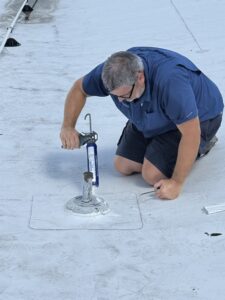
If water is getting in, temporary protection like tarps or sealing an opening keeps the damage from spreading. Keep receipts and photos of anything done. Ask your insurer or agent about any documentation they need for this work. For active leaks, our commercial roof leak repair in Sarasota team can make the roof watertight while you sort out the rest.
6. Get a professional roof inspection
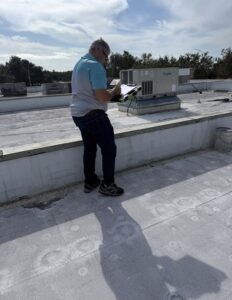
A licensed commercial roofing contractor can find damage you can’t see from the ground: loosened flashing, wet insulation, deck damage, and punctures. Lester or Tony walks the roof, documents what we find, and gives you a written report and estimate you can share with your insurer.
7. Watch out for out-of-town storm chasers
After a major hurricane, crews from out of state show up within days, knocking on doors and pushing to sign contracts on the spot. Lester sees what comes next again and again: building owners calling us to fix roofs that were patched cheaply by a crew that’s no longer around. The low price looked good until the leaks came back and there was no one left to call. For a commercial building owner, the real risk isn’t just a bad repair. It’s who’s accountable when that repair fails.
Red flags to watch for:
- Pressure to sign today. A legitimate contractor will give you a written estimate and time to review it.
- No Florida license, or a license in someone else’s name. Look up any contractor on MyFloridaLicense.com before you sign, and make sure the name on the license matches the name on the contract.
- Asking you to sign over your insurance claim. Talk to your insurer or an attorney first.
- Large cash deposits up front.
- No local address or local references.
A warranty is only worth something if the company that gave it is still around to honor it. A local contractor who’ll be here next hurricane season is the one accountable for the work. For more on spotting them, see our guide to storm chaser roofing companies vs. licensed roofers.
8. Decide on repair, restoration, or replacement
Some storm damage is a straightforward repair. Some roofs are sound enough underneath to restore with a coating system. Others need a full replacement. We work on TPO, modified bitumen, metal, EPDM, built-up, and SPF roofs, so the recommendation follows what the roof needs, not a single product.
9. Plan for the next storm
Once repairs are done, keep drains and gutters clear, trim overhanging branches, and schedule regular inspections, especially before hurricane season. Our pre-storm checklist covers what to check.
7 signs your commercial roof has hurricane damage
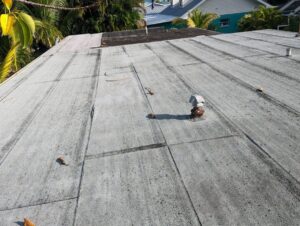
- Leaks or water stains inside the building
- Missing or torn roofing material: lifted membrane, displaced metal panels, torn seams
- Punctures from hail, branches, or flying debris
- Clogged or broken drains and gutters that leave water pooling on the roof
- Sagging or ponding on flat and low-slope roofs
- Blisters or bubbling in the membrane, a sign of trapped moisture
- Mold or musty odors inside, which point to hidden water damage
If you see any of these, get the roof inspected before the next rain makes it worse.
Restoration as one option
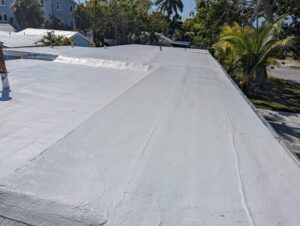
When a storm-damaged roof is still structurally sound, restoration with an elastomeric or SPF coating system can be an alternative to a full tear-off. Troyer Commercial Roofing is a Conklin-certified contractor, and Lester is a Conklin Certified Professional. Restoration is one option we weigh, not the default. It only makes sense when the inspection shows the roof underneath is worth keeping.
We back the workmanship with a 10-year guarantee. Conklin’s manufacturer warranty of up to 20 years on coatings is available on request, depending on the system used.
Storm damage help in Sarasota
Troyer Commercial Roofing is a licensed commercial roofing contractor, and Lester Troyer has been roofing for nearly two decades. We work on commercial roofs in Sarasota, Bradenton, Lakewood Ranch, and Venice. We also serve Nokomis, Osprey, Port Charlotte, and North Port.
Book a free commercial roof inspection and we’ll document the damage and walk you through your options.