
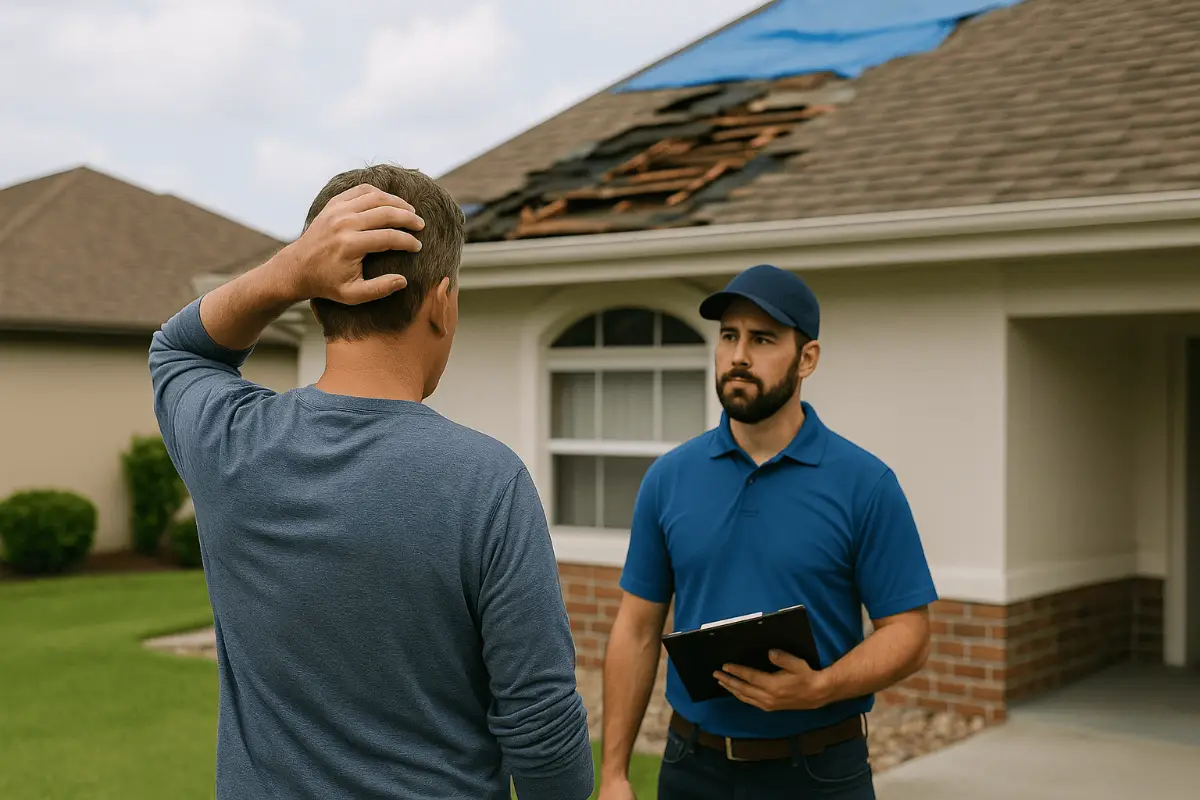
Florida’s storm season brings more than wind and water. It also draws in opportunistic roofers eager to make a quick buck. For commercial property owners and managers, the cost of hiring a fly-by-night contractor can be devastating: unfinished jobs, shoddy repairs, and insurance headaches. Roofing scams are increasingly sophisticated, but with a little know-how, you can spot a dishonest operator before they ever step foot on your property.
Here’s what to look for, what to ask, and how to protect yourself from roofing scams.
What is a fly-by-night roofer?
A ‘fly-by-night contractor’ is a roofer who sets up quickly in storm-affected areas, offers cheap deals, collects deposits, and then disappears. They often lack licensing, insurance, and local reputation. These scammers are especially common after hurricanes, hailstorms, or tornadoes.
How they operate:
- They chase storms and move between states
- They promise fast, cheap fixes to desperate property owners
- They vanish once they’ve collected money — often without completing the work
Common roofing scams in Florida include:
- Insurance fraud (exaggerating damage to increase claims)
- Taking deposits then never starting the job
- Performing unpermitted or non-code-compliant work
- Using poor-quality or leftover materials from other sites that aren’t fit for purpose
Red flags to watch for before you hire
Choosing a roofing contractor isn’t just about price — it’s about trust. Spotting the red flags early can save your building and your budget.
Watch out for:
- Unrealistically low bids: If it sounds too good to be true, it usually is. Rock-bottom quotes often lead to hidden costs, inferior work, or abandonment.
- High-pressure, door-to-door sales tactics: Reputable roofers don’t cold-call after storms. High-pressure salespeople may also push for an immediate signature before you can do research.
- Vague or missing contracts: If a roofer avoids written terms or timelines, walk away. A clear contract protects both parties.
- Reluctance to provide references: A trustworthy contractor will gladly share past projects and testimonials.
How to verify a roofer is legit
You don’t need to be an expert to protect yourself. Just follow these steps to vet any roofing company.
Check their credentials:
- Florida roofing license: Use the DBPR license search tool to confirm the license exists, the contractor is the one listed on the license, it’s the right kind of license for the work, that the license is active and unrestricted, and that the contractor hasn’t received any formal complaints
- Insurance: Ask for proof of liability and workers’ comp insurance
- Business registration: Look them up on Sunbiz to confirm their business is active and local
Use online reviews and databases:
- Better Business Bureau (BBB): Check for complaints or a pattern of disputes
- Google and Yelp: Look for consistent quality and responsiveness
Ask the right questions:
- How long have you been operating in Florida?
- Can you share a portfolio of recent commercial work?
- Do you handle permits, inspections, and warranties?
Checklist — spotting a fly-by-night roofer
If any of the items on this checklist apply, be skeptical and seek a contract elsewhere:
- No license number on website, card, or estimate
- Demands large upfront payment or total pre-payment
- Mentions ‘leftover materials’ from another job as a discount
- Pushes you to sign fast or skips formal paperwork
- Lists an out-of-state license or no physical business address
- Claims permits aren’t necessary or says they’ll ‘handle it informally’
- Dodges questions about previous projects or doesn’t provide references
- Bad or missing reviews on BBB, Google, or DBPR
What to do if you’ve been scammed
It’s a nightmare scenario, but if you think you’ve been targeted by a roofing scam, act fast:
- Stop further payments and secure any documentation you have
- Document the damage or incomplete work with photos and notes
- Report the fraud to the:
- Florida Department of Business and Professional Regulation (DBPR)
- Florida Attorney General’s Office
- Better Business Bureau
- Contact your insurance provider to check if you’re covered
- Consider legal action or the small claims court if appropriate
How property managers can prevent roofing fraud
As a property manager, you’re a high-value target for fly-by-night roofers. Managing multiple properties often means urgent timelines and tight budgets, making it tempting to go with the quickest quote. Here’s how to shield your properties from fraud:
- Build a vetted contractor list: Pre-approve local, licensed roofers before disaster strikes
- Establish long-term vendor relationships: Repeat partnerships offer reliability, pricing transparency, and peace of mind
- Create a protocol for roofing repairs: Always require multiple quotes, proper documentation, and a senior sign-off
- Educate your staff: Ensure team members know the signs of roofing scams
Don’t get caught off guard
Fly-by-night roofers thrive on chaos, especially after storms. But with the right knowledge and a little preparation, you can protect your building and budget. Don’t wait until your roof is leaking to start asking questions.
Want to be sure your roofer is the real deal?
Follow our Fly-By-Night Roofer Checklist or contact Troyer Commercial Roofing for a professional assessment from a trusted Florida-based commercial roofing team.