
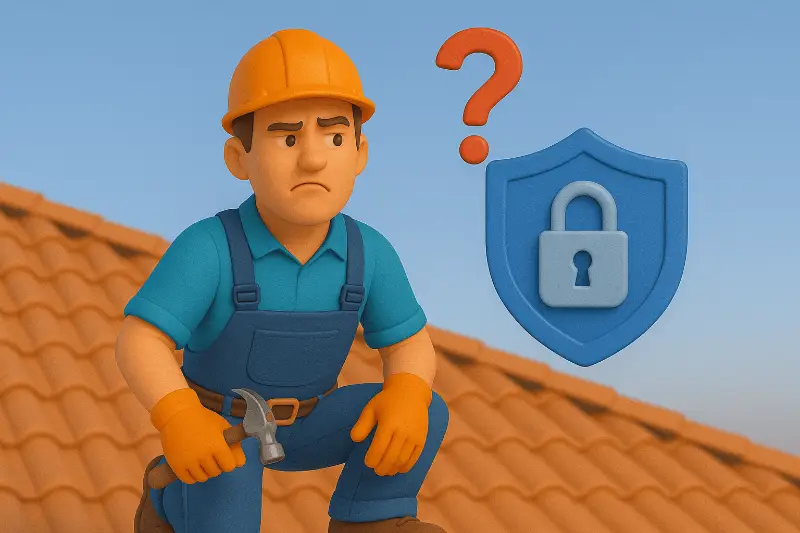
Florida law requires licensed roofing contractors — but many businesses and homeowners are unknowingly hiring people who aren’t.
Simply put, if the person on your roof isn’t the licensed contractor but an ‘agent’, are you truly protected? The roof agent loophole has become a widespread concern in Florida’s roofing industry, and it’s leaving many property owners vulnerable to subpar work, legal headaches, and vanishing contractors.
Here’s how this loophole works, and what you need to do to avoid falling into the trap.
What is a roofing ‘agent’ and why it matters
When it comes to roofing, there’s a major difference between hiring a licensed roofer and someone who is acting as an agent for one.
What is the agent loophole in Florida roofing?
An ‘agent’ is someone who works under or represents a licensed contractor — but isn’t the license holder themselves. These agents often sell roofing jobs, coordinate repairs, and even manage crews — all without being legally or professionally accountable for the work.
Licensed roofer vs. agent
- Licensed roofer — Passed required state exams, holds liability insurance, and is legally responsible for the work
- Agent — May not be licensed or insured, and can disappear without consequence if a job goes wrong
What risks do property owners and managers face with agents?
- No legal recourse — If the agent skips town or does shoddy work, you may be stuck with the bill
- Insurance issues — Your insurer may deny claims for damage caused by unlicensed or unqualified individuals
- Voided warranties — Manufacturer and workmanship warranties may be invalid if the work wasn’t done by a licensed contractor
Understanding roofing licenses in Florida
To protect yourself, it’s critical to understand what a Florida roofing license actually allows — and who needs to have one.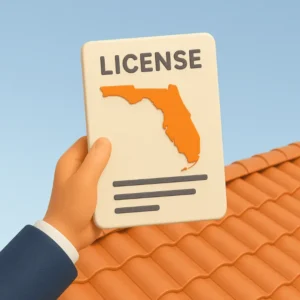
What work does a Florida roofing license cover?
A certified roofing license in Florida allows the contractor to:
- Install, repair, maintain, and replace all types of roofing
- Operate legally anywhere in the state
- Pull permits and oversee roofing crews
Can out-of-state contractors work in Florida?
No — interstate roofing licenses are not valid in Florida. Contractors must be licensed by the state of Florida to perform roofing work legally.
How do you get a roofing license in Florida?
- Pass Florida’s construction exam
- Provide proof of experience
- Show financial responsibility
- Carry required insurance coverage
Do roofing agents need licenses?
No — and that’s the problem. Agents aren’t subject to any formal licensing process. There’s no exam, no liability coverage, and no oversight.
How to verify roofing credentials
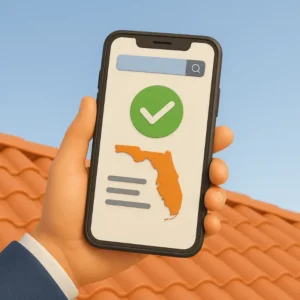 Before you sign a contract, make sure your roofer is legit.
How to know if a roofing company is licensed
Ask for their license number, and verify it through the official Florida license search tool:
🔎 myfloridalicense.com
What to look for
- Active license with the State of Florida
- Proper classification for roofing work
- No serious complaints or license violations
- The name on the license matches the name of the contractor you’re working with
Red flags of an unlicensed or fake roofer
- Refuses to provide a license number
- Claims they ‘work under’ someone else’s license
- Requests cash payment or refuses to sign a written contract
- Has no local address or verifiable contact information
Why you should always hire a licensed roofing contractor
Hiring a licensed roofing contractor is the only way to ensure your project is done legally, safely, and with accountability.
Benefits of working with licensed roofers
- Work is inspected and meets Florida Building Code standards
- You can be eligible for extended warranties and manufacturer guarantees
- Contractors are accountable for quality and safety
Warranty protection
Only licensed contractors can offer valid warranties backed by manufacturers like Conklin. If something goes wrong, you have recourse — but not if an agent handled the work.
Advantages of hiring local licensed roofers
- Deep knowledge of Florida’s unique climate challenges
- Familiarity with regional building codes and permitting
- Easier to reach and hold accountable if follow-up work is needed
Risks and costs of hiring an unlicensed roofer
 The short-term savings of using an unlicensed roofer or agent can lead to serious long-term problems.
Risks of hiring an unlicensed roofer
- Legal liability — You may be held liable for injuries or damage if the contractor is unlicensed
- Permit issues — Unlicensed work is often done without permits, risking fines and forced removal
- No legal protection — Agents can skip town, leaving you with no contract, no warranty, and no help
Here at Troyer Commercial Roofing we’re often contacted by businesses who previously hired someone to work on their roof thinking they were licensed contractors, only to discover leaks months later. When these clients have reached out to the ‘contractor’ to organize for the issues to be rectified, they’ve unfortunately found the ‘contractor’, who was actually only an agent, has already moved on to another state, leaving them in the lurch. We’re always happy to help businesses in this situation, but we’d much rather no one had such issues in the first place!
Licensed vs unlicensed cost comparison
- Unlicensed agent — Lower upfront cost, but no warranty, risk of poor workmanship, and possible fines or rework required
- Licensed roofer — Slightly higher cost, which allows the contractor to deliver quality guarantees, valid permits, and insurance protection
Stay Protected: Hire Legitimate, Licensed Roofing Professionals
Don’t leave your business vulnerable to shady contractors. Only a licensed roofing contractor — not their agent — is legally allowed to perform roofing work in Florida.
By choosing a verified professional, you protect yourself from financial loss, insurance denial, and warranty voids.
Always verify your roofer. Use Florida’s official license lookup tool — or contact us today for a trusted, licensed roofing expert near you.
🪪 Here’s our number if you want to check us out — we’re happy to answer your questions and show proof of license anytime.
CCC1333471