
A little roof rust can turn into a big problem, but don’t panic. Whether your roof has light surface rust or deeper corrosion, there are solutions that can repair the damage and prevent it from getting worse — most of the time, you don’t need to replace the roof.
Read on to discover the causes of rust, how to repair a rusted metal roof, and how to apply long-term protection that extends your roof’s lifespan and saves your budget.
Why metal roofs rust and warning signs to look out for
Even though metal roofs are known for their durability, they’re not immune to corrosion.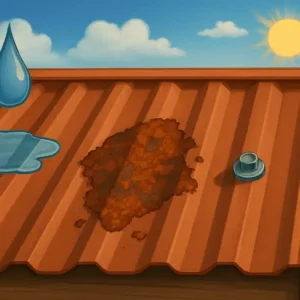
What is rust?
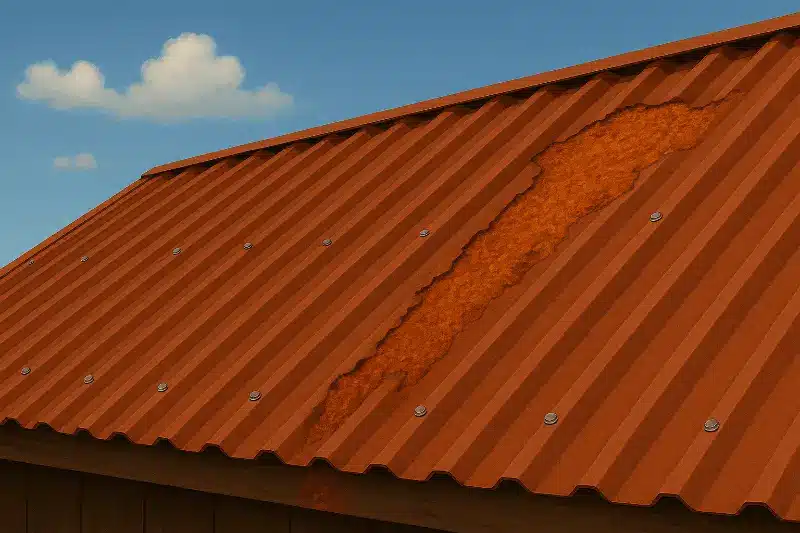
Rust on a metal roof refers to the corrosive oxidation of iron or steel components when they’re exposed to moisture and oxygen over time. It manifests as a reddish-brown or orange flaking or scaling on the surface of the metal. Rust is not just a cosmetic issue — it compromises the structural integrity of the roofing system and can lead to leaks, perforations, and eventual roof failure if not addressed.
What causes metal roofs to rust?
Normally, metal roofs, including those made of steel, are galvanised, which means they’re coated in a layer of another metal that is more prone to rusting than the material the roof is made from. The coating therefore rusts first, protecting the metal of the roof in a process known as cathodic protection.
In the case of steel roofs, the metal is coated with a layer of zinc. Over time the zinc reacts with oxygen and water and gradually corrodes. (Note, zinc rust is white rather than orange.) Once the zinc coating has rusted through, water and oxygen can then begin corroding the steel underneath.
All metal will eventually rust, but the following will cause a metal roof to rust faster.
- Water exposure — Standing water, especially on flat or low-slope roofs
- Scratched or worn coatings — UV exposure and debris can degrade protective layers
- Salty air — In coastal areas, salt can accelerate rusting
- Poor drainage — Blocked gutters and poor slope design can trap moisture
How rust impacts roof integrity
- Rust weakens metal panels, reducing load-bearing capacity
- It compromises seams and fasteners, leading to leaks
- Over time, it can cause total panel failure if left untreated
Early signs of rust damage
- Brown or orange discoloration near seams, fasteners, or edges
- Flaking paint or blistering coatings
- Dents or soft spots in roof panels
- Water stains inside the building
Repairing a rusty roof instead of replacing it
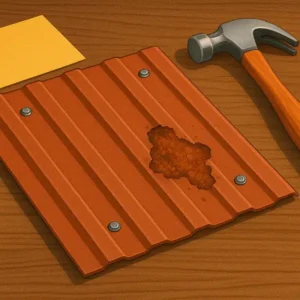 The good news? A rusty roof doesn’t always mean it’s time for a new one.
How to know whether to repair or replace a roof
- Patch if the damage is isolated and hasn’t affected structural integrity
- Replace sections if rust has eaten through the metal in places or caused warping
- Replace the entire roof if the damage is widespread, coatings have failed across large areas, or the roof is nearing the end of its service life — especially if leaks are recurring or repairs no longer hold
How to repair a rusty galvanized metal roof
If it turns out repair is a viable option for your situation, here are the steps needed to rejuvenate your roof:
- Inspect and assess the extent of the rust
- Clean all affected areas
- Treat small rust spots with chemical removers or sandblasting
- Patch and seal minor holes or corroded seams
- Apply rust-inhibiting primer
- Seal the roof with a protective coating for long-term protection
Flashing and sealant best practices
Areas where metal panels overlap and the joins between different sections of roof can be particularly prone to rusting. There may also be other areas of your roof that are more susceptible to rust (e.g. because water pools in that area). These additional steps can help:
- Use butyl tape or polyurethane sealants on rust-prone joints
- Consider stainless steel flashing in rust-prone areas for added durability
More detailed information about each of these steps is below.
Rust damage assessment and repair planning
Before you can fix rust, you need to understand how bad the damage is.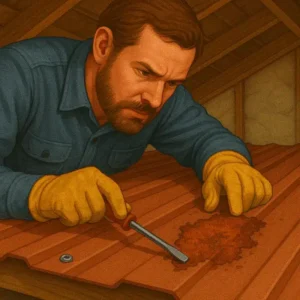
Start with a thorough visual inspection of your roof — inside and out. Look for surface-level rust on the top of the panels, as well as signs of deeper corrosion, such as:
- Soft spots where the metal has thinned
- Bubbling or delaminating paint
- Rust-coloured stains on insulation or framing under the roof
Use a screwdriver or scraper to test suspected areas. If the metal flakes away or feels brittle, it may be structurally compromised.
Don’t forget the underside of the roof. Interior moisture from leaks or condensation can cause rust from below, particularly around fasteners and seams.
Common mistakes to avoid
- Skipping the inspection: Treating the visible rust alone can mask bigger problems underneath
- Using the wrong sealants: Standard silicone isn’t always compatible with metal — opt for products designed specifically for metal roofs
- Ignoring the root cause: If you don’t address poor drainage, bad ventilation, or other underlying issues, rust will return
Surface preparation and rust removal techniques
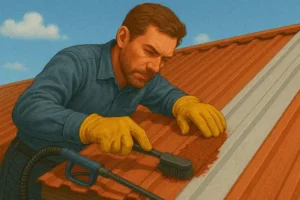 Rust removal isn’t glamorous, but it’s essential. The better the prep, the longer your repairs will last.
Here are the most effective methods:
- Wire brushing or sanding — Great for small, flaky patches
- Grinding — For more advanced corrosion, a power grinder can strip rusted layers quickly
- Chemical rust removers — Ideal for stubborn rust; look for rust converters or metal prep solutions
- Pressure washing — Use a degreasing cleaner to remove all debris, oils, and dust after rust removal
Finish the prep by drying the surface thoroughly. Even light moisture can compromise primers and coatings.
Coating and protecting your roof
Once the rust is gone, you’ll need to protect the surface against future corrosion.
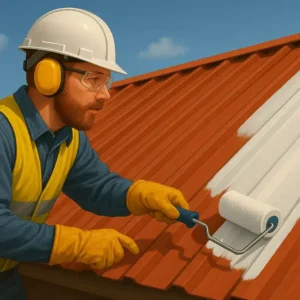
Start with a primer
A rust-inhibiting metal primer helps seal and stabilise the surface, creating a bond between the roof and your final coating.
Then choose a protective coating
- Acrylic roof coatings — Affordable, UV-resistant, and easy to apply
- Elastomeric coatings — Flexible and durable for climates with extreme temperatures
- Silicone coatings — Water-resistant and ideal for areas with heavy rainfall or ponding water
We use and recommend Conklin coatings because they’re great value for money, extend the life of your roof, and provide a host of additional benefits, such as reducing your cooling costs. Note, the also come with great warranty periods if installed by a certified roofing contractor.
How long do coatings last?
It depends on the product and your environment, but many coatings last 10–20 years (Conklin coatings come with a warranty of up to 20 years depending on the coating you choose). Regular inspections will help you spot early wear and determine when it’s time to recoat.
Safety and compliance considerations
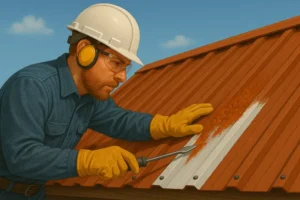 Working on a rusty roof comes with specific safety and legal concerns.
Regulatory considerations
- Building codes may require commercial roofs to be structurally sound and free from excessive corrosion
- Insurance policies might include maintenance requirements to keep your cover valid and they may require professional maintenance and repair work (you may need to hire a certified roofing contractor to conduct repairs to ensure your insurer will continue to cover your roof)
Safety best practices
- Always wear PPE: gloves, goggles, and non-slip shoes
- Use fall protection systems on sloped or elevated roofs
- Avoid working in wet or windy conditions
- Don’t use power tools near flammable sealants or coatings
- Hire a professional team of experienced roofing contractors, like Troyer Commercial Roofing, to ensure everyone remains safe throughout the entire job
Environmental factors
Choose materials based on your environment. Coastal or industrial zones may need marine-grade coatings or stainless steel components to resist salt or chemical exposure.
When to replace instead of repair
- If rust has perforated large areas or weakened the structure
- If multiple repair attempts haven’t resolved issues
- If the roof is near the end of its service life and restoration is going to struggle to extend the life significantly
Take control of rust before it spreads
Rust doesn’t have to mean a costly roof replacement. With proper inspection, targeted repairs, and high-quality protective coatings, you can restore the integrity of your metal roof and keep it performing well for years to come.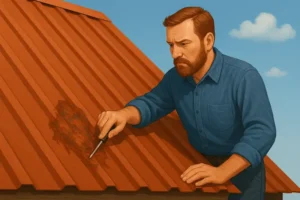
Don’t wait for rust to win. The sooner you act, the easier and more affordable the repair.
Not sure how bad your rust problem is? Book a free roof inspection today and get expert recommendations for long-lasting repairs.