
Why We Recommend Verifying the Name on Every Roofing Contract
You wouldn’t just hand over money to a complete stranger, so why trust a roofer without verifying their credentials first? Here’s how to check you’re working with a fully licensed roofing contractor.
Why verifying a contractor’s name is essential
Before you sign any commercial roofing contract, stop and ask: is the name on the paperwork the actual licensed contractor? Or is it a salesperson working under someone else’s license?
It’s critical to check the contractor license by name to avoid exposing your business to hidden costs, liability risks, and unfinished or substandard work. In Florida, roofing is a licensed trade and only licensed professionals can legally contract roofing services.
What’s the danger of skipping this step?
- You may unknowingly sign with a roofing agent, not a licensed roofing contractor
- You could be held financially responsible for code violations or injuries
- Insurance claims may be denied if the roofer isn’t properly licensed
- You’ll have little legal recourse if something goes wrong
A licensed roofing contractor in Florida must meet specific qualifications, carry insurance, and register with the Department of Business and Professional Regulation (DBPR). A roofing agent may just be a representative — not the actual licensed party responsible for the work.
To safeguard your property and your finances, check the contractor license status before signing anything.
Steps to verify a roofing contractor’s license
Wondering how to check a roofing license in Florida? It’s easier than most people think — and absolutely essential.
Here’s how to verify a roofer’s credentials step by step:
- Ask for their full name and license number
Reputable roofers will provide this without hesitation. - Visit Florida’s DBPR license lookup
Go to the DBPR license lookup tool and click “Search by Name” or “License Number.” - Enter their name/license number as it appears on the contract
Use the contractor’s legal name — not the business name or agent’s name. - Check license status and expiration date
Confirm the license is active, not expired, suspended, or revoked. - Review business affiliations and complaints
You’ll see a list of related licenses and any disciplinary actions.
Whether you’re in Miami, Tampa, or anywhere else in Florida, these steps will ensure you’re working with a professional who’s qualified — not just a good talker.
Red flags when hiring a roofing contractor
Even when someone seems legitimate, it’s worth staying alert. Many businesses fall victim to roofing scams because they overlook subtle warning signs.
When doing a roofing license check, keep an eye out for red flags like:
- They can’t (or won’t) give you a license number
- The name on the contract doesn’t match the licensed entity
- They request large payments upfront before providing documentation
- They use vague, high-pressure sales tactics
- They insist on handling insurance claims for you without clear terms
A licensed roofing contractor will provide clear documentation and answer your questions openly. If you’re unsure or pressured to skip verification, it’s a sign to walk away.
Verifying a roofer’s reputation and credentials
A license is a starting point — but it’s not the only indicator of a contractor’s professionalism. Before committing to a roof repair or replacement, look into their credentials and reputation too.
Here’s how to go deeper:
- Read third-party reviews on Google, BBB, and industry platforms
- Ask for references from recent commercial clients
- Review their portfolio of completed projects
- Check industry affiliations and manufacturer certifications
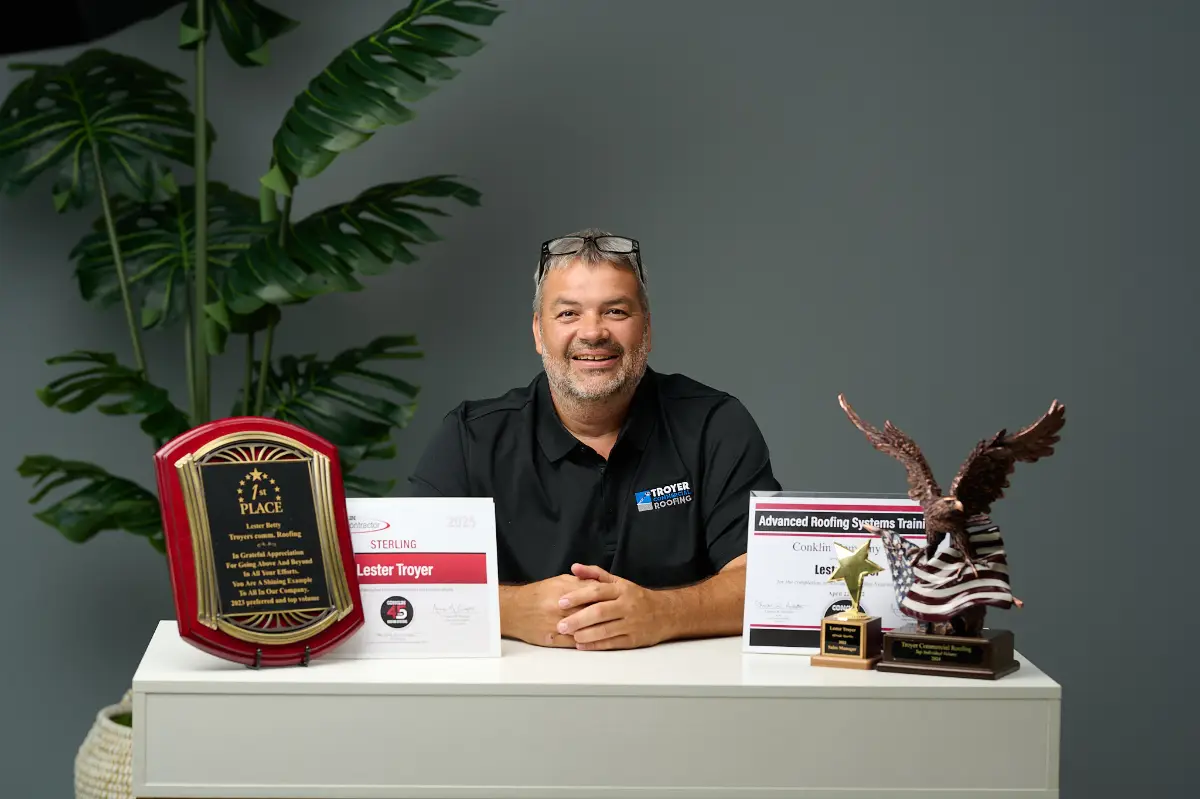
Choosing a licensed roofing contractor with proven experience gives you peace of mind. Troyer Commercial Roofing, for example, is proud to maintain all relevant licenses and certifications — but we also go beyond the minimum to build trust and long-term client relationships.
Protecting your roofing investment with smart hiring
Roofing is a major investment for your commercial property — and hiring the right contractor can make or break the outcome. That’s why we always recommend you check the contractor license by name, not just the company brand or sales rep.
To protect your investment:
- Vet at least two or three contractors
- Check their name and license status with the DBPR
- Request everything in writing, including scope of work and warranties
- Retain all documentation for future maintenance or insurance purposes
- Don’t rush — pressure is often a red flag
If your chosen contractor checks out, then you can move forward confidently, knowing your project is in licensed, insured, and capable hands.
Make sure your next roofing project is in good hands
In Florida, it’s not enough to assume someone is licensed — you need to verify it. Whether you’re reviewing bids, comparing quotes, or finalising a contract, take a moment to check the contractor license by name. It’s one of the simplest, smartest ways to protect your business.
Ensure your commercial roofing investment is protected — verify your contractor’s license. Or choose Troyer Commercial Roofing for a reliable, fully licensed roofing contractor businesses love to work with. Reach out now for an obligation free roofing inspection.