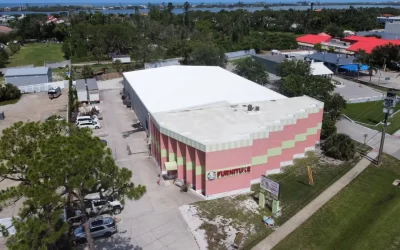

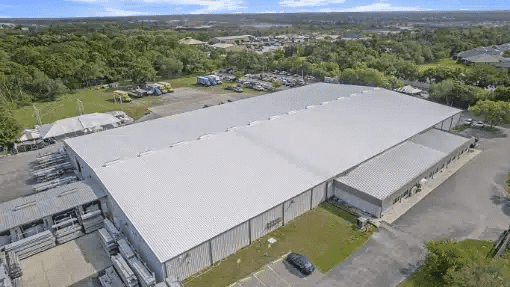
Did you know your commercial building’s roof could be the key to lower energy bills and increased sustainability for your business? The design of your roof — not just the materials — plays a critical role in how much heat your building absorbs or reflects, how well it maintains a stable indoor temperature, and how efficiently it uses energy overall.
In this article, we’ll explore how energy efficient roof design influences building performance and what steps you can take to improve your commercial building’s energy efficiency — without tearing off and replacing the entire structure.
How roof design affects energy efficiency
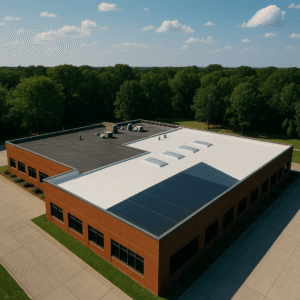
The style and structure of a commercial roof can significantly impact energy usage, especially when it comes to climate control.
How roof shape affects heat gain and loss
- Flat roofs, which are common in commercial buildings, tend to absorb more heat and require high-performing insulation and reflective coatings to stay efficient. Sloped roofs can provide better water runoff and, depending on the angle and orientation, can be more effective at reducing solar heat gain.
- Roofs with overhangs or design features like parapets can shade the structure and minimize heat absorption.
Best roof design strategies for reducing heat gain
- Orienting slopes to limit sun exposure during peak hours
- Incorporating reflective surfaces or coatings
- Designing with airflow in mind to promote natural ventilation beneath the roof
Location matters
In warmer climates, like Florida, the goal is to reflect heat away. Whereas in colder regions, energy efficiency may involve designing a roof that retains warmth. Regional considerations — like sun angle, prevailing winds, and humidity — must all be factored into the design of sustainable roof systems.
Energy-efficient roofing materials and their benefits
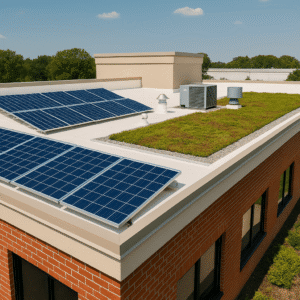
Choosing the right roofing material is one of the most important decisions for maximizing a building’s energy efficiency.
What is the most energy-efficient roofing material?
- Metal roofing with reflective coatings is excellent for reducing cooling costs
- TPO and PVC membranes are commonly used in commercial roofing for their high reflectivity and heat resistance
- Modified bitumen with reflective coatings can also help in warm climates
Eco-friendly roofing options
An energy-efficient roof is an eco-friendly roof, to some extent. However, if you want to go a step further and ensure the roofing materials themselves are ‘green’, here are some options:
- Recycled rubber or plastic shingles
- Clay and concrete tiles with natural insulating properties
- Living roofs
Is energy-efficient roofing a smart investment for businesses?
You can probably guess the answer to that question, but it’s worth being sure the cost of an energy-efficient roof is outweighed by energy savings.
Pros:
- Lower utility costs
- Reduced HVAC wear and tear
- Improved indoor comfort
- Increased property value and sustainability credentials
Cons:
- Higher upfront cost for premium materials
- May require additional structural support or retrofitting
Despite the initial cost, most energy-efficient roofing systems pay off in the long run through energy savings and tax incentives.
The role of insulation, ventilation, and skylights in improving energy efficiency
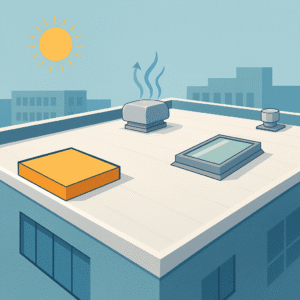
Even the most efficient roof design and materials won’t perform well without proper support systems.
The importance of insulation
Just as your home will benefit from insulation, so too does insulation help regulate interior temperatures in commercial buildings, reducing the need for heating and cooling. High R-value insulation materials, like polyisocyanurate or spray foam, are ideal for flat and low-slope roofs (which are the most common commercial roofs).
The importance of ventilation
You might think ventilation works against your heating and cooling systems by allowing newly warmed or cooled air to escape. But ventilation is actually really important in all buildings.
- Ventilation removes pollutants, moisture, and odors, preventing mold and respiratory issues while enhancing comfort
- Natural ventilation reduces the load on HVAC systems
- Systems like energy recovery ventilation (ERV) can recover 70-80% of the energy from outgoing air, minimizing heating and cooling costs
- Airtight buildings with controlled ventilation improve thermal performance without compromising air quality
Skylights and daylighting
When properly designed and placed, skylights can reduce the need for artificial lighting. Using energy-efficient skylights with low-emissivity coatings and diffusing glazes ensures they don’t introduce excess heat.
Cool roof systems and reflective roofing technologies
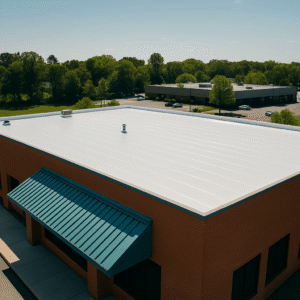
Cool roofs are designed to reflect more sunlight, absorb less heat, and emit heat more efficiently (once they have absorbed it) than standard roofs. They’re particularly effective in warm climates where air conditioning demands are high.
Design considerations for cool roofs
- Use light-colored or white reflective membranes
- Apply reflective roof coatings like elastomeric acrylics — we recommend Conklin’s coatings
- Ensure proper insulation to prevent heat transfer
Reflective coatings vs. cool roofing membranes
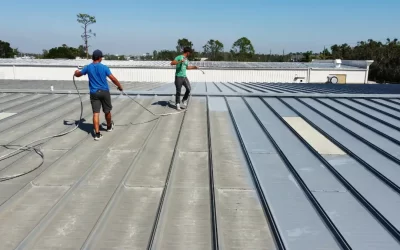
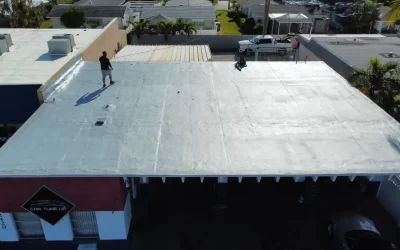
- Reflective coatings can be applied over existing roofing systems, making them ideal for retrofitting
- Cool roofing membranes are installed as part of the roof system and may offer better long-term performance, but they often require a full roof replacement
Trends in commercial roof design for energy efficiency
Commercial roof design is rapidly evolving to prioritise energy efficiency, with several innovative trends gaining traction across the industry. One standout development is the rise of smart roofing systems, which integrate sensors to monitor temperature, moisture levels, and even structural integrity in real time. These insights allow building managers to optimise maintenance and energy usage proactively.
Another emerging trend is the use of hybrid roofing systems that combine reflective membranes with green roof elements. This approach reduces heat absorption while also providing natural insulation and improving stormwater management.
Additionally, more commercial properties are adopting solar-reflective materials — especially on flat and low-slope roofs — to minimise heat gain, lower cooling costs, and reduce overall environmental impact. While integrating green roof elements can require structural adjustments to adequately support heavy living systems, applying a roof coating usually doesn’t require any structural changes, and thus this is something most businesses can do.
Strategies for increasing efficiency without replacing the entire roof
As mentioned above, adding a cool-roof membrane is done as part of a new roof installation or the installation of a replacement roof, whereas a reflective, cool-roof coating, such as that offered by Conklin, is applied over an existing roof. Other things you can do to improve the efficiency of your commercial roof, without having to replace the entire roof, include:
- Add insulation or replace existing insulation with a product that has a higher R value (the R value is a measure of thermal resistance)
- Install energy-efficient skylights or ventilation upgrades
- Install solar panels to transform solar energy into electricity that runs HVAC systems and lights etc.
Green roofs and sustainable roofing systems
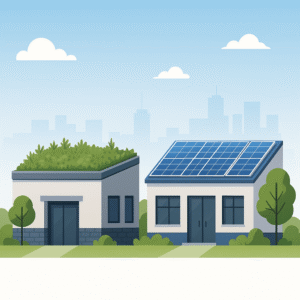
A green roof — one that incorporates living vegetation — offers multiple energy efficiency benefits and is a trendy option for improving the sustainability of homes and commercial buildings.
How green roofs improve building performance
Green roofs do more than add visual appeal — they actively enhance a building’s performance by regulating temperature, managing rainwater, and improving overall comfort. Here are just some of the specific improvements they can make to a building:
- Reduce the urban heat island effect and insulate buildings naturally, reducing reliance on heating and cooling systems
- Improve stormwater management by reducing runoff and making use of it to grow the plants
- Provide added soundproofing, improving auditory comfort for those working in the building
Long-term benefits of living roof systems
Beyond immediate performance improvements, sustainable roofing systems offer long-term advantages that can reduce operating costs, extend the life of your roof, and boost your building’s environmental credentials. Specific long-term benefits can include:
- Energy savings, thanks to a decreased need for artificial heating a cooling
- Reduced maintenance costs, since the roof itself is physically protected from UV, hail, and storm damage (although the plants have maintenance costs associated with them)
- Enhanced roof lifespan, thanks, again, to physical protection from the elements that tend to age and damage roofs
- Reduction in CO2 emissions, since plants can act as carbon sinks
- LEED (Leadership in Energy and Environmental Design) certification or other sustainability credentials, which could help attract environmentally conscious customers (and which may align with your business’s values)
Retrofitting a green roof for energy efficiency
Retrofitting an existing roof for improved energy performance with live vegetation involves significant structural considerations, including ensuring the roof can support the additional weight of soil, plants, and water. It typically requires adding waterproof membranes, drainage layers, and root barriers — all of which must be carefully designed to suit the building’s structure and local climate.
While the process can be complex and costly, especially for older buildings not originally designed to accommodate a green roof, the long-term gains in insulation, stormwater management, and sustainability can make it a worthwhile investment for some businesses.
Having said that, living green roofs require regular maintenance to remain effective and healthy. This includes seasonal inspections, weeding, irrigation (especially during dry periods), and ensuring drainage systems remain clear and functional. While some systems are designed to be lower maintenance, ongoing care is essential to prevent plant loss, water damage, and structural issues over time.
As a result, it’s important to carefully consider the ongoing maintenance costs compared to the energy cost savings. There’s a reason so few buildings feature living roofs — and it’s not just because they take a lot of work and expertise to design and build. For most businesses, a cool-roof coating is more likely to be the economic and practical choice for improving energy efficiency.
Here in Florida, there are also building code issues to contend with.
Building codes
Roof design for energy efficiency must also comply with local building codes and performance standards.
- Many areas now require minimum reflectivity ratings or insulation R-values for new roofing systems
- Some cities mandate sustainable roof installations on new commercial buildings
- Compliance with energy codes like ASHRAE 90.1 or the International Energy Conservation Code (IECC) is often required
In Florida, for example, roofs must meet guidelines for:
- Wind resistance
- Energy efficiency
- Solar reflectivity
Make smart roofing choices for long-term energy savings
An energy efficient roof design isn’t just about materials — it’s about strategic choices in shape, ventilation, insulation, and coatings that all work together to reduce energy consumption.
From cool roofs and reflective coatings to green roofs and proper ventilation, there are countless ways to enhance your commercial building’s energy efficiency — even if you’re not building from scratch.
Ready to upgrade your roof without starting over? Contact Troyer Commercial Roofing to explore how our strategic roofing solutions — including Conklin roof coatings — can help you cut energy costs and improve sustainability.