
Filing a roof insurance claim for your commercial property can feel overwhelming. Between understanding your policy, documenting damage, and negotiating with adjusters, the process can quickly become complicated.
This guide covers the general process of filing a commercial roof insurance claim, not the specifics of your policy. Every insurance policy is different, so always check with your insurance company or agent to confirm exactly what your policy covers before you file. By keeping good records and understanding the general process, you can help your commercial property get the necessary repairs or roof replacement.
Understanding commercial roof insurance coverage

Insurance coverage for commercial roofs depends on several factors, including the cause of damage, your policy’s terms, and the condition of your roof before the incident. Insurance for commercial roofs also works differently than insurance for residential roofs, so if you’ve made a home insurance claim before, the process won’t necessarily go the same way for your commercial property. Your insurance company or agent can walk you through exactly what your policy covers.
When does insurance pay to remedy roof damage?
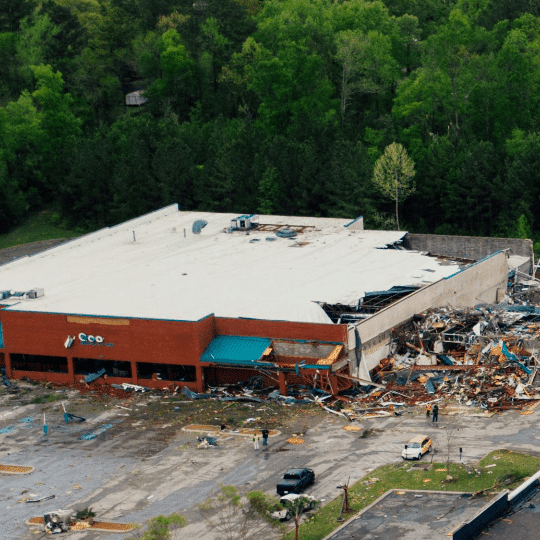
Most policies cover damage caused by:
- Storms (wind, hail, heavy rain)
- Fire
- Vandalism
- Falling objects (such as trees or debris)
However, not all roof damage is covered. Insurance companies may deny claims for:
- Normal wear and tear
- Improper maintenance
- Pre-existing damage
- Certain roofing materials (e.g., some policies exclude older flat roofs or specific coatings)
Review your policy with your insurer or agent before filing a claim so you understand exactly what’s covered.
Key differences between residential and commercial roof insurance claims
- Scale of assessment: Commercial roofs are larger and require a more detailed inspection
- Policy variations: Commercial policies often have different exclusions, deductibles, and payout limits compared to residential coverage
- Business impact considerations: Business interruption coverage may be a factor in commercial claims
When does insurance cover roof replacement instead of repairs?
An insurer may approve a full roof replacement if:
- The damage is extensive and repairs wouldn’t restore the roof’s integrity
- The roof is beyond its expected lifespan and repairs would only provide a temporary fix
- Local building codes require full replacement for safety reasons
Florida rules that affect your claim
Florida property insurance law has changed several times in recent years. A few things worth knowing before you file:
- One-year filing deadline: Florida law requires you to file a property insurance claim within one year of the date of loss, with a shorter window if you’re reopening or supplementing a claim. Don’t wait to notify your insurer.
- Assignment of Benefits (AOB) restrictions: Florida has tightened the rules around AOB agreements, where a contractor takes over your claim on your behalf. Read any contract carefully before signing over your claim rights, and ask your insurer if you’re unsure how an AOB affects your policy.
- Roof-to-wall connection work (HB 715): as of May 2025, licensed roofing contractors in Florida can evaluate and reinforce roof-to-wall connections, often called hurricane straps, when the work is done alongside a repair or replacement. Ask your roofer whether this applies to your building.
- Policy term change notices: insurers are now required to give more specific notice when your policy terms change at renewal. Review any notice closely, or ask your agent to explain what changed.
These are general summaries, not legal advice. For how any of these apply to your specific policy or claim, talk with your insurance company, agent, or an attorney.
The process of filing a commercial roof insurance claim

A successful claim starts with proper documentation and timely action. Here’s how to file your roofing insurance claim efficiently.
- Assess the damage: Inspect the roof for visible issues like leaks, cracks, or missing materials
- Take photos and videos: Document all damage before making temporary repairs (if required) and before starting a claim
- Review your policy: Understand what is and isn’t covered. Your insurance company or agent is the best source for exact policy details; consult a legal professional if you have questions about your rights
- Contact a professional roofer: A trusted roofing contractor can provide an inspection report and estimate
- Decide whether to claim: If the cost of repairs is less than your insurance deductible, or is less than what you estimate your increased premium will be as a result of making a claim, you might choose not to make a claim and instead organise, and pay for, the repairs yourself
- Notify your insurer: File your claim with all required documentation
- Meet with an adjuster: The insurance company will send an adjuster to assess the damage
- Negotiate if necessary: If the payout is lower than expected, you may need to dispute the claim
Who should you call first, a roofer or your insurance company?
It’s best to call a roofer first. A professional can assess the damage, provide an unbiased report, and help you understand whether your claim is likely to be approved. They can also help you understand the likely cost of repairs or a replacement, which can also help you decide whether to make a claim or pay for repairs out of pocket.
What records are required?
- Before-and-after photos of the roof
- Maintenance records
- Inspection reports from a licensed roofer
- Repair estimates and invoices
What happens after your claim is approved?
- The insurance company issues a payout based on the adjuster’s estimate
- You select a roofing contractor to complete the work
- Repairs or replacement begin, restoring the integrity of your commercial roof
Common challenges in roof insurance claims

You might think claim challenges are only an issue when someone tries to submit a claim when they’re not really entitled to coverage. However, even legitimate commercial roof insurance claims can face obstacles.
Why do insurance companies deny roof claims?
- Lack of maintenance: If the roof was in poor condition before the damage occurred, insurers may refuse coverage
- Insufficient documentation: Missing records or incomplete reports can delay a claim or cause it to be denied
- Disputes over cause of damage: Insurers may argue that the damage was pre-existing or caused by improper installation
What should you do if your claim is denied?
- Request a detailed explanation: Ask your insurer for the specific reasons behind the denial
- Gather more documentation: Additional records from your roofer can support your case
- Talk to your insurer or an attorney: They can walk you through your options for appealing the decision
Making the most of your claim

A few habits can help your claim move smoothly and give your insurer the clearest picture of your roof’s condition.
- Get a professional roof inspection: a documented report gives your insurer clear evidence of the damage and scope of work
- Keep detailed records: maintain all insurer communication in writing and your roof’s maintenance history
- Ask questions: if an offer or decision doesn’t make sense, ask your insurer or agent to explain it before deciding how to respond
How can a roofing company assist with your claim?
A local roofing contractor can provide a professional assessment of the damage, share reports and estimates directly with your insurer or adjuster when asked, and help document your roof’s maintenance history. For anything about what your policy covers, your premium, or your legal rights, your insurance company, agent, or an attorney is the right resource.
FAQs about roofers and insurance adjusters
How do insurance adjusters assess roof damage?
- They inspect the extent and cause of the damage
- They compare findings against policy terms
- They determine whether repairs or a full replacement are necessary
What should you avoid when choosing a roofer for insurance repairs?
- Storm chasers: Avoid companies that appear after major weather events with aggressive sales tactics
- Unlicensed contractors: Always verify credentials before hiring
- Rushed inspections: A proper assessment takes time; be wary of companies offering instant quotes without a thorough evaluation
Questions about premiums and your rights

Here are a few questions we hear often, though your insurance company, agent, or an attorney is the best source for specifics on your policy and rights.
Does filing a claim increase your insurance premium?
It can. Insurers reassess risk based on claims history, so filing, especially more than one within a short period, can lead to a higher rate. Ask your insurer or agent how a claim might affect your specific policy before you file.
What should I know about filing accurate claims?
Keep accurate records and only claim what the documented damage supports. Questions about fraud, penalties, or legal exposure should go to an attorney or your insurer, not your roofing contractor.
How can disputes over roof insurance claims be resolved?
Options can include an appraisal process (a neutral third party assesses the claim), mediation, or legal action. An attorney or public adjuster can explain which option fits your situation.
Take control of your commercial roof insurance claim

Filing a commercial roof insurance claim doesn’t have to be stressful. By keeping detailed records, working with a trusted roofing contractor, and checking in with your insurance company or agent along the way, you can help make sure your property gets the coverage and repairs it needs.
Need help assessing your roof damage? Schedule a roof inspection with Troyer Commercial Roofing. We’ll evaluate your roof, provide a professional damage report, and help you understand what it needs, so you can make an informed decision with your insurer.