
101 Guide to Preventing Flat Roof Water Ponding by Inspecting Drains and Scuppers After Storms
Every heavy Florida downpour puts your commercial roof to the test. When drains or scuppers get clogged — with leaves, dirt, debris, or sometimes even seedlings — the water has nowhere to go and even a shallow pool left for a day or two can damage roof membranes, invite leaks, and shorten your roof’s lifespan.
Blocked drainage is one of the most common, and most preventable, causes of commercial roof deterioration in Florida. It often starts small — a bit of debris here, some scouring around the drain there — but over time those neglected details can lead to costly structural damage and lost revenue from water intrusion.
We want your roof to last as long as possible. If you do too, read on to discover why routine post-storm checks of your roof’s drains and scuppers are essential. We’ll also show you what to look for after heavy rain, how to identify early warning signs of ponding and scouring, and when it’s time to call a professional. A few minutes of careful inspection could save your facility thousands of dollars and years of roof life.
Why proper roof drainage matters in Florida
Florida’s climate is a constant test for commercial roofing systems. Intense downpours, tropical storms, and high humidity create conditions where even the best flat or low-slope roofs can struggle to drain effectively. Unlike pitched roofs, which shed water naturally, flat roofs rely entirely on well-designed drainage systems — usually a network of internal drains and scuppers — to remove thousands of litres of water during each storm.
When these systems become blocked or damaged, the results are quick and costly. Standing water, known as ponding, can begin to degrade roof membranes within days. The extra weight strains structural supports, and the constant moisture accelerates the breakdown of coatings and adhesives. Even small pools can seep through seams, creating hidden leaks that appear weeks later inside the building.
In Florida, where roofs must endure both extreme rainfall and powerful UV exposure, proper drainage isn’t optional — it’s essential. Regular inspections after heavy rain help prevent ponding water from becoming a persistent problem, protecting not just the roof surface but the insulation, decking, and interior spaces below. By keeping drains and scuppers clear, smart facility managers can extend the life of their roofing systems and avoid premature repairs or replacements.
The role of drains and scuppers in preventing leaks
Every flat or low-slope roof depends on a simple principle — water must have a clear path to escape. That’s where drains and scuppers come in. These components form the heart of many a commercial roof’s drainage system, directing water away from the surface and off the building before it can cause damage.
Roof drains are typically positioned in low points or near internal plumbing lines. They collect water from the roof and channel it through pipes that lead safely to ground level. Scuppers, on the other hand, are openings along the edge of the roof that let water flow directly through the parapet wall into downspouts or gutters. Together, they create a dual-layer defence against water accumulation.
Over time, though, debris from nearby trees, windblown rubbish, and even loose roofing materials can collect in these drainage points. Once water flow slows, fine silt and organic matter settle in, creating blockages that worsen with each storm. The result is pooling water that adds unnecessary stress to the roofing system and can eventually find its way beneath seams or flashing.
Worse, if organic matter sits there long enough, it can begin to break down and form the perfect nutrient-rich substrate for tree seeds to germinate and grow in. And trust me, you do not want a tree growing in your roof drain.
If you schedule regular drain and scupper checks — especially after Florida’s heavy summer rains — you can spot issues early and prevent widespread deterioration. Keeping these channels clear is one of the simplest and most effective ways to maintain roof performance and prevent costly leaks.
How to inspect drains and scuppers after heavy rain
A roof inspection doesn’t need to be complicated, but it does need to be consistent and cautious — especially after a major Florida storm. The goal is to spot visible warning signs of trouble before they turn into costly leaks or structural issues.
- Wait for safe conditions. Never step onto a wet or slippery roof. Inspections should only begin once the surface is dry and it’s safe to access.
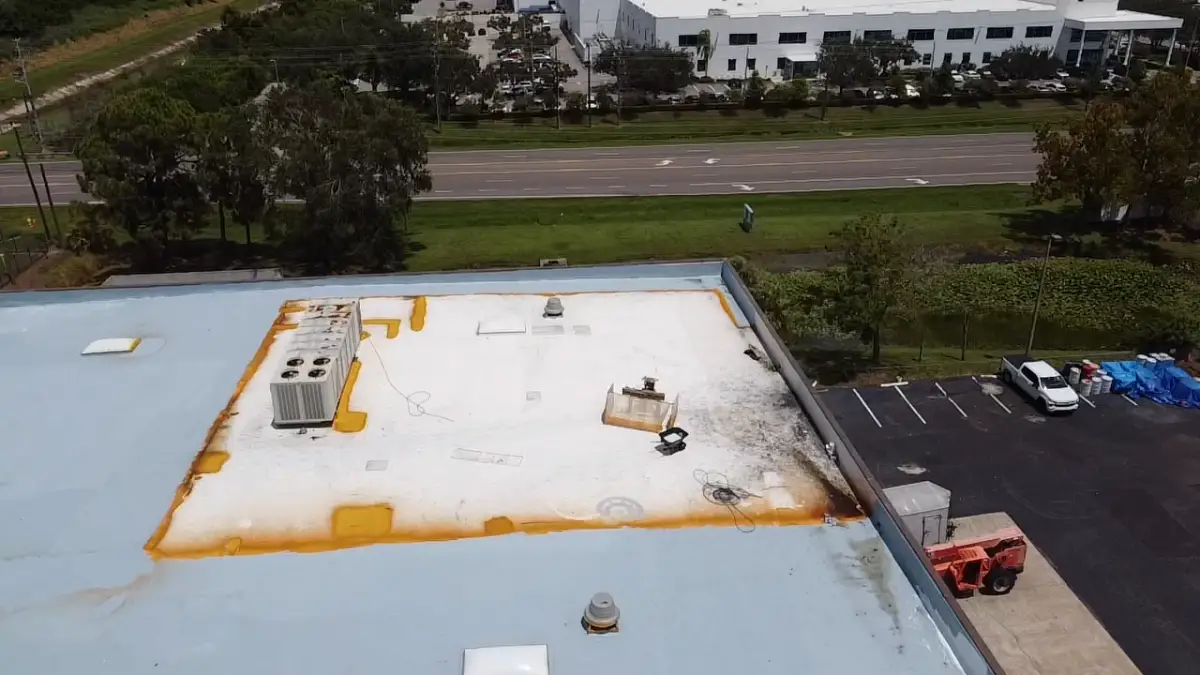
- Look for standing water. Any area where water remains 48 hours after rain is a red flag. Persistent ponding can signal a clogged drain, sagging insulation, or uneven roof decking.
- Check drains and scuppers for debris. Remove leaves, twigs, and any rubbish that may be obstructing water flow. Be thorough — small items can lodge in the drain bowl or outlet and cause backups later.
- Examine for scouring. Scouring looks like erosion around the drain or scupper, often exposing layers beneath the coating. It indicates that water is moving too forcefully in one area, potentially compromising the surface and leading to leaks.
- Inspect seams, flashing, and nearby coatings. Look for cracks, peeling, or bubbled areas that could let water in. Minor damage in these zones can spread quickly if left unaddressed.
- Document and photograph findings. Record any damage or pooling to share with your maintenance team or roofing contractor. Consistent documentation helps track patterns over time and supports warranty claims if needed.
Regular post-storm checks like these are one of the best preventive steps you can take. They keep small drainage issues from escalating and make it easier for professionals to repair or recoat vulnerable areas before the next storm hits.
When to call a commercial roofing professional
Some drainage problems can be solved with simple cleaning, but others require professional attention — especially when water or structural issues are already visible. Knowing when to call in an expert can prevent minor maintenance from becoming major repair work.
- Persistent ponding. If water consistently collects in the same spots after every storm, the issue may be more than debris. Poor roof slope, saturated insulation, or collapsed decking can all create low points that trap water. These conditions need expert assessment and repair to restore proper drainage, repair any structural damage, and ward off future structural deterioration.
- Signs of scouring or erosion. When water cuts channels or exposes underlying materials around drains and scuppers, it’s a sign that the surface coating has weakened. Professionals can reinforce those areas, repair affected membranes, or apply a protective roof coating system to prevent further deterioration. This could allow your roof to last for many more years to come. Without it, your roof might need replacement within as little as a year.
- Interior water stains or leaks. Moisture appearing inside the building — even small brown spots on ceiling tiles — often points to drainage problems above. Delaying an inspection can allow leaks to spread into insulation or electrical systems. As you can imagine, it’s much cheaper to seal a leak and refresh a coating than it is to replace soaked insulation or damaged electronics.
- Recurring debris or blocked outlets. If your maintenance team clears the same drain repeatedly, there may be an underlying design flaw. A professional roofer can modify drainage layouts or install strainers and guards that reduce blockages. This can save you a lot on future repairs due to repeated ponding.
- Visible damage to coatings or flashing. Cracks, peeling, or lifted seams near drainage points expose the roof to water infiltration. Addressing these early prevents widespread membrane failure.
If you’re particularly busy and find yourself either forgetting to inspect and clean your drainage system or unable to schedule repairs in a timely manner, you might appreciate setting up a maintenance program that includes detailed inspections after Florida’s major rain events, along with cleaning, minor repairs, and coating restoration to extend roof life. This kind of program is also fantastic for buildings with complex or recurring drainage issues as professional assessment ensures your roofing system continues to perform as designed.
For a more detailed inspection checklist, see How to Check for Roof Damage After a Storm — Hidden Storm Damage Facility Managers Overlook.
Prevent flat roof ponding water from becoming your next repair bill
Effective roof drainage is one of the simplest, most powerful defences against costly water damage. In Florida’s unpredictable climate, where sudden storms and heavy rainfall are routine, a few minutes of inspection after each downpour can protect your facility’s most valuable asset — its roof.
By checking for debris, clearing blocked scuppers, and watching for early signs of ponding or scouring, facility managers can prevent leaks before they start. These routine steps not only extend the life of your roofing system but also preserve energy efficiency, structural integrity, and warranty coverage.
If you notice persistent ponding, erosion around drains, or damage to coatings and seams, it’s time to bring in a professional. The experts here at Troyer Commercial Roofing can identify underlying drainage issues and recommend targeted solutions to restore performance.
If you need professional help rectifying drainage issues on your roof, schedule a drainage inspection today to keep water flowing where it belongs — off your roof and away from your business.