
How Reflective Roof Coatings Cut Energy Costs for Florida’s Commercial Buildings
Florida businesses are under pressure to control rising operating costs. And the fact that cooling costs continue to rise, year after year, doesn’t help things one bit. With so much of a building’s heat gain coming from the roof, even small improvements in roof performance can have a substantial impact on energy use. And the larger the building is, the more you stand to gain. The question is, what can you do to improve your roof’s performance? One answer lies in the use of reflective coatings, which can reduce cooling costs by up to 54%, making them one of the strongest energy-efficiency upgrades available for commercial properties.
This topic is important for every American business but it matters even more in Florida, where long cooling seasons, high humidity, and intense sun exposure make roofs work harder than they should. A reflective coating changes how the roof interacts with heat, improving comfort inside the building and creating an opportunity for meaningful savings that extend far beyond monthly utility bills.
Simply put, reflective coatings offer one of the most effective ways to reduce a roof’s heat load, helping commercial buildings stay cooler and lowering the strain on HVAC systems while also extending the life of the roof. Read on if you’d like to understand how reflective coatings help, how much they could reduce your energy bill by, and how much it might cost you to have a coating applied to your commercial roof.
Why commercial roofs in Florida drive higher energy bills than they should
Florida’s climate creates a perfect storm for buildings that rely heavily on air conditioning. Long cooling seasons, high humidity, and intense sun exposure cause commercial roof surfaces to soak up large amounts of heat throughout the day. As that heat transfers into the building, HVAC systems must work harder and run longer just to maintain comfortable indoor temperatures. This constant workload raises energy bills and increases mechanical wear, which can lead to more frequent maintenance and reduced system lifespan. And to add insult to injury, the same process that increases HVAC running and maintenance costs also leads to premature roof deterioration meaning you could need to buy a new roof for your building much sooner than would otherwise be the case.
Flat commercial roofs are especially vulnerable because they often use materials that retain heat, such as modified bitumen or older TPO, and because frequent water ponding (which is a common problem for flat and low-slope roofs) can prematurely degrade roofing materials, impairing their ability to reflect solar radiation. Once these surfaces heat up, they continue radiating warmth downward into the building long after the sun has set. This keeps indoor temperatures higher than necessary and prevents HVAC equipment from ever fully cycling down.
Heat absorption also affects the roof itself. Repeated heating and cooling cycles cause expansion and contraction across the membrane, accelerating aging and creating opportunities for cracking, seam separation, and other failures that lead to costly repairs. For Florida businesses trying to manage rising operational expenses, recognising how much heat enters through the roof is the first step in identifying meaningful ways to reduce energy use.
How reflective roof coatings help Florida buildings use less energy
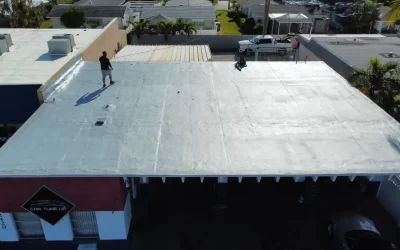
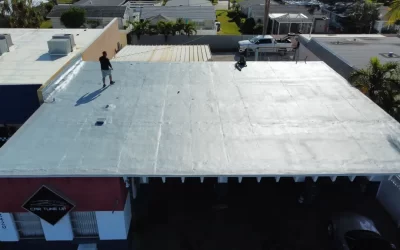
Once you understand how much heat a commercial roof absorbs, the next question becomes how to stop that heat from entering the building in the first place. Reflective roof coatings offer a practical, cost-effective way to do this by changing how the roof interacts with sunlight. Instead of soaking up solar radiation, a reflective coating sends much of that heat back into the atmosphere, which helps the roof stay noticeably cooler throughout the day.
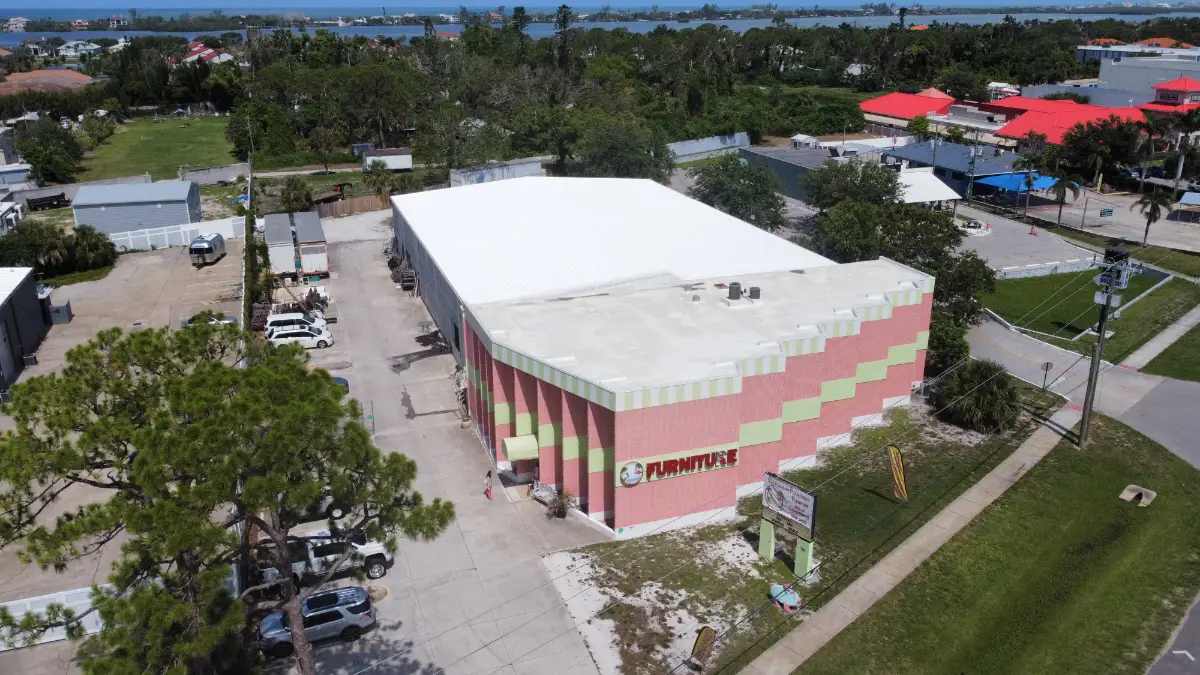
This reduction in surface temperature has a direct impact on indoor comfort and cooling demand. A cooler roof transfers far less heat into the building, which means the HVAC system doesn’t have to work as hard or as long to maintain a stable indoor environment. Even a small drop in heat transfer can produce significant energy savings across large commercial spaces like warehouses, retail centers, and manufacturing facilities.
Reflective coatings also help stabilise roof temperature from morning to night. Florida roofs typically experience extreme swings, heating rapidly during the day and cooling quickly after sundown. These shifts contribute to membrane fatigue and premature aging. By moderating roof temperature, reflective coatings reduce stress on the roofing system, which helps extend its service life while easing operational costs.
Real-world savings: How much Florida businesses can actually save
Reflective roof coatings create measurable financial benefits that show up in both monthly operating costs and long-term building performance. Studies on energy-efficient roofing systems consistently report that reflective coatings can reduce energy costs by 22-54%. To put those percentages into perspective, if electricity costs around 15 cents per kilowatt-hour, a typical commercial property, which may use 50,000 kWh or more for climate control, could save around $1650-$4050 or more each year. In Florida’s cooling-dominant climate, most of that impact comes from lowering the demand on air-conditioning systems during the hottest parts of the day.
Cooling load reduction is often the first and most noticeable saving. When the roof no longer radiates heat into the building, HVAC systems cycle less often and run for shorter periods, which helps stabilise indoor temperatures without the constant energy draw. For large facilities such as retail centers, distribution warehouses, and manufacturing operations, this shift can translate to thousands of dollars in annual savings.
The benefits extend beyond electricity use. When HVAC equipment works less, it experiences less mechanical strain, which can reduce maintenance needs and extend the life of major components. This provides significant value for businesses that rely on climate-controlled environments.
Reflective coatings also help protect the roof itself. By moderating temperature swings, coatings reduce membrane stress and slow deterioration, delaying the need for major repairs or full replacement. This creates further financial relief over the life of the building.
The Conklin advantage: Proven reflectivity and long-term performance
Not all reflective coatings deliver the same level of performance, which is why product selection matters. Conklin coatings are designed to maintain high reflectivity over time, even under the intense UV exposure and year-round humidity that challenge Florida roofing systems. Their chemistry helps the coating stay brighter and more reflective for longer, which supports consistent energy savings throughout the life of the system.
Conklin’s high-reflectance formulas resist dirt pickup and surface degradation, helping the roof maintain its ability to reflect heat rather than absorb it. This stability is essential for businesses that need predictable energy performance.
Conklin coatings also provide strong waterproofing benefits. When paired with proper preparation and installed by an experienced contractor, they create a seamless protective layer that shields the roof from UV damage and thermal stress. This combination of reflectivity and durability allows the coating to deliver energy savings while extending the life of the roof.
Conklin offers several coating types that cater to a wide range of roof materials. They’re also compatible with spray-on external insulation which can be quickly applied to an existing roof to further reduce heat transfer into the building. This is a fantastic option if your roof’s construction is such that internal insulation can’t be added across the whole roof.
Coating vs. replacement: The financial case for restoring your roof
 When a commercial roof begins to show signs of aging, many businesses assume replacement is the only viable option. In reality, repairs coupled with a reflective coating can often restore the roof’s performance at a fraction of the cost. This approach renews the roof surface and improves energy efficiency without the expense and disruption associated with a full tear off.
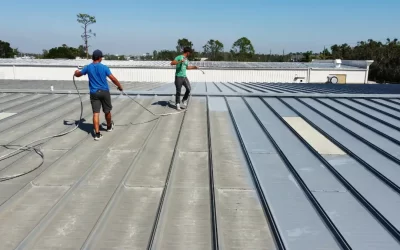
A coating system is especially cost-effective for roofs that are structurally sound but deteriorating at the surface. Instead of removing the existing materials, the coating is applied over the current membrane after proper preparation. This saves labor and landfill costs and reduces downtime, allowing businesses to continue operating with minimal interruption.
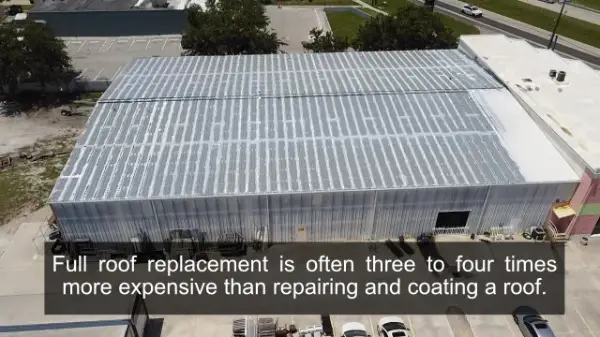
Full roof replacement is often three to four times more expensive than repairing and coating a roof. (Even a direct metal-over-metal reroof is usually around twice the price of restoration and coating.) This makes restoration a far more cost-effective option for many commercial buildings.
Beyond immediate savings, coatings extend the roof’s service life. By reducing heat absorption, moderating temperature swings, and protecting the membrane from UV exposure, coatings slow the progression of wear. When energy savings are factored in, the financial case becomes even stronger.
Your next step toward a cooler, more cost-efficient commercial building
A reflective roof coating has a measurable impact on how much heat the building absorbs, how hard the HVAC system needs to work, and how quickly wear accumulates across the roofing surface. For Florida businesses, these improvements can translate into meaningful reductions in monthly operating costs and better protection for one of the building’s most valuable assets.
Choosing a high-quality coating installed by experienced professionals ensures these benefits are delivered consistently. Conklin’s performance-proven systems paired with Troyer Commercial Roofing’s expertise provide a reliable pathway to lower energy use and a longer-lasting roofing system.
If you’re exploring ways to reduce operating expenses or want to understand how much a reflective roof coating could save your facility, an on-site inspection is the ideal starting point. We can assess your current roof, estimate potential energy savings, and recommend the most effective coating solution.
Schedule your free commercial roof inspection today and take the first step toward a cooler, more efficient commercial building.