
How UV, Heat, and Humidity Accelerate Roof Degradation and What You Can Do About It
Florida’s sunshine might power tourism and palm-lined postcards, but for commercial roofs, it’s a daily endurance test. Relentless UV rays, extreme heat, and year-round humidity quietly wear down even the toughest materials, shortening roof lifespan and driving up maintenance costs.
Understanding how these environmental forces attack your roof is the key to stopping them. From UV-resistant coatings to scheduled inspections, there are proven ways to keep your building protected — and your budget under control.
Why Florida’s climate is so harsh on commercial roofs
Florida is the Sunshine State and sunshine is a daily stress test for roofs. Constant UV radiation, heavy humidity, and extreme heat combine to create one of the toughest environments for roofing systems anywhere in the United States. Understanding how these forces interact is the first step toward preventing premature roof degradation in Florida.
UV radiation: The invisible roof killer
Ultraviolet light breaks down the chemical bonds in roofing materials over time. Bitumen dries out, single-ply membranes become brittle, and coatings lose flexibility. As a roof’s surface hardens and cracks, it becomes more vulnerable to water infiltration — especially during Florida’s intense afternoon storms. Even the strongest materials eventually succumb if they’re not protected by UV-resistant coatings.
Heat and thermal expansion
Daily temperature swings cause constant expansion and contraction across flat and metal roof systems. In Florida, rooftop temperatures can soar above 65°C (150°F) on sunny days, then drop sharply when the sun sets. This thermal cycling loosens fasteners, weakens seams, and accelerates fatigue in adhesives and membranes. Over time, it leads to cracks, splits, and leaks — especially around penetrations and flashing.
Humidity and moisture intrusion
Humidity is Florida’s constant companion. It seeps into roof assemblies, promoting mold growth, corrosion, and loss of adhesion between layers. When moisture becomes trapped beneath membranes or coatings, it can cause blistering and delamination, weakening the roof’s integrity. Even well-installed roofs can fail prematurely if humidity isn’t managed with proper ventilation and timely maintenance.
The combined effect
These three elements — UV radiation, heat, and humidity — don’t just act independently. Together, they compound the stress on roofing systems. Without regular inspections and protective coatings, most Florida commercial roofs degrade far faster than their design life.
That’s why proactive protection isn’t optional here; it’s essential.
The telltale signs of environmental roof damage
Environmental wear doesn’t usually appear overnight. It begins subtly, with surface changes that are easy to overlook — until leaks or costly repairs follow. Recognising the early signs of UV, heat, and humidity damage can save Florida facility managers thousands in repair or replacement costs.
Signs of UV and heat damage
When UV rays and thermal cycling take their toll, you’ll often see the surface of the roof begin to change texture or colour.
- Chalky, powdery residue on white or coated roofs signals oxidation and loss of protective layers.
- Brittleness or hairline cracking in membranes shows that the material has dried out from sun exposure.
- Blistering or bubbling often forms when heat causes air or moisture to expand beneath the surface.
- Faded or uneven colouring can mean parts of the coating have lost reflectivity, absorbing more heat and speeding up deterioration.
Signs of humidity and moisture intrusion
Humidity attacks from the inside out.
- Soft or spongy areas on flat roofs suggest water has seeped under the membrane.
- Delamination (where layers of coating lift or peel) often indicates trapped moisture.
- Dark patches or mildew growth point to poor drainage or consistent dampness.
Left unaddressed, these issues weaken adhesives and insulation, eventually leading to leaks and interior water damage.
Why small problems escalate quickly in Florida
In Florida’s subtropical climate, minor surface defects rarely stay small. Constant UV exposure widens cracks, while daily downpours push water into every weakness. High humidity keeps roofs from drying out, allowing damage to spread underneath coatings and membranes. Within a single wet season, a neglected issue can escalate from cosmetic wear to full membrane failure.
Spotting these early warning signs — and acting before the rainy months intensify them — is the key to avoiding premature roof degradation in Florida.
How reflective roof coatings counteract UV, heat, and humidity damage
Once roof damage starts, it’s hard to reverse — but the right protective coating can dramatically slow the process. Reflective roof coatings act like sunscreen for your building, shielding it from Florida’s relentless UV rays and reducing surface temperatures that trigger thermal stress.
How reflective coatings work
Reflective coatings are engineered to bounce sunlight away rather than absorb it. By reflecting UV and infrared radiation, they lower the surface temperature of the roof by as much as 30–40 percent. This helps reduce thermal expansion and contraction, extending the life of membranes, seams, and fasteners.
A cooler roof also minimises energy transfer into the building, reducing air conditioning loads and helping facilities maintain consistent indoor temperatures.
Why Conklin coatings excel in Florida conditions
Here at Troyer Commercial Roofing we use Conklin’s advanced acrylic coating systems, which have proven performance under Florida’s punishing sun and humidity.
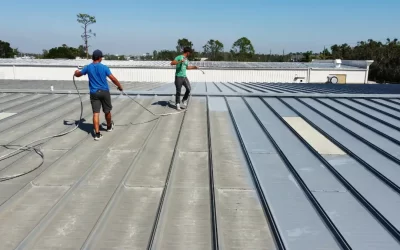
Conklin coatings create a seamless, waterproof membrane that resists cracking, chalking, and moisture intrusion. Their high solar reflectivity helps maintain roof surface temperatures even during peak summer months, while their flexibility allows the coating to expand and contract without splitting.
Another key advantage is renewability. Instead of replacing the roof when the coating wears down, the system can be cleaned and recoated — restoring full protection and warranty coverage at a fraction of the cost of re-roofing.
Tangible benefits for Florida businesses
The results go beyond protection. Reflective coatings can:
- Extend roof lifespan by reducing UV and heat-related degradation.
- Lower energy costs by keeping roof surfaces cooler and easing HVAC strain.
- Prevent leaks and moisture damage with a seamless, watertight barrier.
- Reduce environmental impact by avoiding premature tear-offs and landfill waste.
These benefits make coatings one of the most cost-effective long-term solutions for Florida’s commercial property owners.
When installed by our expert team, a reflective roof coating isn’t just maintenance — it’s an investment in your building’s future resilience.
The role of inspections and maintenance in extending roof lifespan
Even the best roof coating needs regular attention to perform at its peak. In Florida, where weather conditions shift from scorching sun to torrential rain, routine inspections are the backbone of a long-lasting commercial roof.
Why inspections matter
Every roof experiences wear and tear, but in Florida’s climate, that process happens much faster. Regular inspections catch small issues — like minor seam splits or coating wear — before they evolve into leaks or structural damage.
Our technicians know how to spot the early warning signs that untrained eyes often miss. Their detailed inspections help businesses plan maintenance budgets and avoid emergency repairs during the rainy season.
Recommended inspection schedule
A good rule of thumb for Florida facility managers is to schedule inspections twice per year:
- Early spring, before the first big storms arrive. This allows time for any minor issues to be fixed before storms turn them into major damage.
- Late autumn, after the rainy season ends. This is a great time to locate any damage from the storms that have just past.
These checkpoints ensure your roof stays watertight year-round and any minor damage is repaired before it becomes serious.
Preventive maintenance tips
Proactive care can add years to your roof’s life and save thousands in avoidable costs.
- Clean debris from gutters, drains, and scuppers to prevent ponding water.
- Recoat before deterioration, not after leaks start. Timely recoating keeps UV and moisture protection strong.
- Trim overhanging trees to reduce organic buildup and shade-related mold.
- Check rooftop equipment for loose mounts or penetrations that can compromise waterproofing.
- Document every inspection — this creates a maintenance record that supports warranty coverage and helps track roof performance over time.
The long-term payoff
Consistent inspection and maintenance aren’t just about preventing leaks. They’re a form of capital protection.
When a roof lasts five or ten years longer than expected, that’s real financial value — freeing up funds for other facility improvements. And when paired with Troyer’s reflective coatings, a disciplined maintenance program can keep Florida roofs performing like new for decades.
Real-world results and reassurance
Roof protection isn’t theoretical — it’s measurable. Florida businesses that invest in reflective coatings and regular maintenance often see immediate returns in both performance and cost savings.
Proven results in Florida conditions
Troyer Commercial Roofing has restored countless commercial roofs across the state using Conklin systems designed for heat and humidity. These coatings routinely reduce rooftop temperatures by up to 30 percent, keeping indoor environments cooler and reducing air conditioning costs.
In several Florida warehouses and retail facilities, Troyer clients have extended roof life by more than two decades with a single coating application. Instead of facing a complete tear-off, they simply clean and recoat the surface when the system reaches the end of its warranty period — saving up to half the cost of re-roofing.
The Conklin advantage in action
Conklin’s advanced acrylic coatings are engineered for renewability. Once applied, they form a seamless, watertight barrier that reflects sunlight and repels moisture. When the surface eventually weathers, it can be renewed with another layer — restoring full protection and warranty coverage.
That means one investment can protect a facility for decades, provided it’s maintained properly. It’s a solution that turns roof care from a recurring expense into a sustainable asset.
Peace of mind through partnership
Beyond products and warranties, we offer what matters most — confidence. With scheduled inspections, reliable service, and coatings proven to withstand Florida’s heat and humidity, facility managers can rest easy knowing their roofs are built to last.
From schools and warehouses to manufacturing plants and retail complexes, our approach consistently delivers lasting performance and measurable savings.
Your roof is a critical business asset. Treating it that way is the surest way to protect both your property and your bottom line.
Protect your roof from Florida’s toughest elements
Florida’s weather doesn’t take days off — and neither should your roof protection plan. Constant UV exposure, extreme heat, and unrelenting humidity accelerate roof degradation in Florida faster than almost anywhere else in the country.
But with the right combination of reflective coatings, routine inspections, and expert maintenance, you can break that cycle and extend your roof’s lifespan by years.
Troyer Commercial Roofing has the local experience, Conklin-certified expertise, and proven track record to keep your commercial roof performing at its best — no matter how harsh the climate gets.
Protect your investment from Florida’s relentless sun and moisture. Schedule a professional roof inspection or coating consultation with Troyer Commercial Roofing today.