
Not all aging commercial roofs need to be replaced. In fact, restoring your roof instead of replacing it can save thousands of dollars and extend the life of your property. However, in some cases, a full roof replacement is necessary to protect your building from structural damage and costly repairs down the road.
So, how do you know if roof restoration is worth it, or if it’s time for a full replacement? This guide will help you weigh the pros and cons of each option and make an informed decision that maximizes the value of your roof investment.
Pros and cons of commercial roof restoration and roof replacement
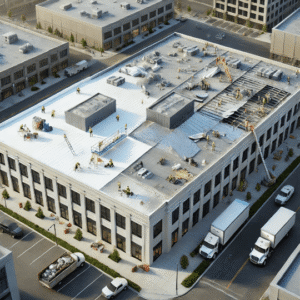
When weighing roof restoration vs. replacement, it’s crucial to understand the benefits and drawbacks of each option. Choosing the wrong path can lead to unnecessary expenses or long-term damage to your property.
Advantages of roof restoration
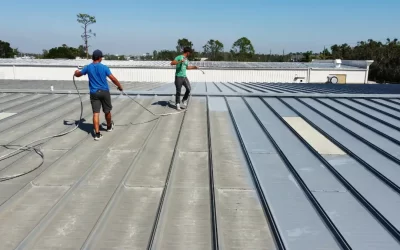
- Cost-effective — A complete roof restoration can be significantly cheaper than a full, or even partial, replacement, plus restoring a roof can reduce air conditioning and heating costs as well as maintenance costs (this is especially true if your restoration includes application of a reflective cool-roof coating like Conklin’s)
- Extended roof lifespan — Restorations can add 10–20 years to the life of your roof
- Eco-friendly — Reducing waste by avoiding a tear-off keeps materials out of landfills, and restoring a roof can reduce energy consumption and therefore greenhouse gas emissions (depending on how you source energy for your business)
- Minimal disruption — Roof restoration is faster and less disruptive to business operations
- Increases property value — A roof restoration can improve curb appeal and resale potential
Disadvantages of roof restoration
- Not suitable for severely damaged roofs — Extensive damage may be difficult to repair or so costly, a replacement becomes better value for money
- Limited improvement in some cases — While a restored roof looks and functions better, if the roof has structural issues, a restoration may be less effective and it may make more strategic sense to start over and then invest in more ongoing maintenance of the new roof to ensure it lasts longer
Advantages of roof replacement
- Resolves extensive damage — While a restoration can remedy a lot of issues, there is a limit, whereas a new roof can rectify any damage
- Resolves structural issues — If there’s structural damage, replacement may be the only way to ensure long-term stability
- Increases property value — Replacing a traditional or out-dated roof with something modern could increase property values beyond the scope of what a restoration can achieve
- Energy-efficient options — Modern roofing materials can reduce energy costs beyond what can be achieved through restoration of a roof built with outdated technology
Disadvantages of roof replacement
- Higher upfront costs — Replacing a roof is a major investment
- Longer installation time — A full replacement can take weeks, impacting business operations
- More waste — Old roofing materials are often removed and sent to landfills
What happens if you replace a roof when it could have been restored?
Unnecessary roof replacements can cost tens of thousands of dollars. If your roof is in decent condition, restoring it instead of replacing it can save you significant money while maintaining its integrity.
What happens if you repair a roof that really needs to be replaced?
If a failing roof is only patched up instead of replaced, further roof deterioration and structural damage can occur. This can lead to higher repair costs in the future and potential safety risks for the building’s occupants.
Factors that determine whether you need a roof restoration or replacement
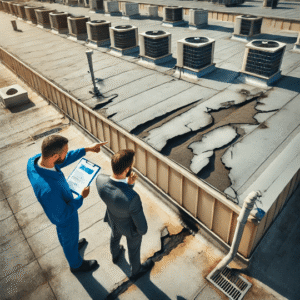
Understanding whether you need roof repair vs. replacement depends on several key factors.
- Age of the roof — If your roof is approaching the end of its expected lifespan, replacement is more likely to be on the cards (though plenty of older roofs in decent condition can benefit from restoration)
- Extent of damage — Minor leaks and wear can usually be addressed with restoration, but widespread damage may require a full replacement
- Energy efficiency — If the energy efficiency improvements of a new roof will end up saving you more money over time than the difference in price between a restoration and replacement, then it may make more sense to replace the roof
- Local building codes — Some regulations require full replacements rather than repairs for older structures — for instance, Florida’s 25% Rule requires a full replacement if more than 25% of an older roof is damaged within a 12-month period (this doesn’t apply if your roof was built after March 1, 2009)
When should you consider an overlay reroof instead of a full replacement?
An overlay reroof — installing new shingles or other roofing materials over an existing roof — can be a cost-effective alternative to replacement if the roof structure is still in good condition but damage to the roof materials is too extensive for a restoration. However, if there are multiple layers of old roofing, a complete replacement may be required.
Cost considerations for roof restoration vs. replacement

When evaluating the cost to restore, overlay, or replace a commercial roof, it’s important to compare the financial benefits as well as the costs.
Average investment
The cost to repair or replace a commercial roof depends heavily on the size, materials, and design of your roof, however, below is a rough guide.
- Roof restoration — $4500–$20,000+
- Overlay re-roofing — $10,000-$35,000+
- Roof replacement — $15,000–$60,000+
Ongoing savings
The financial benefits of restoring or replacing your roof will likewise vary depending on the size, materials, and roof design, as well as on the extent of the damage. The below figures should help you estimate potential savings for your own roof.
- Reflective coatings used in roof restorations can reduce cooling costs by up to 30% in warm climates like Florida’s
- White roofs can reduce air conditioning energy consumption by up to 15% (for single-story buildings) because buildings with white roofs experience up to 7% lower internal temperatures during peak heat hours, reducing strain on cooling systems
The financial impact of extending a roof’s lifespan
Choosing restoration over replacement when possible can lead to long-term cost savings by delaying a costly roof replacement and improving energy efficiency.
The role of preventative maintenance in roof longevity

A proactive roof preventative maintenance program can help extend the life of your roof and reduce repair costs.
How often does a roof need to be replaced?
- Asphalt shingles — 15–30 years
- Metal roofing — 40–70 years
- Flat roofing systems — 10–30 years, depending on maintenance
How does preventative maintenance extend a roof’s lifespan?
- Regular inspections help identify small issues before they become costly problems.
- Routine cleaning prevents debris buildup that can cause damage.
- Applying protective coatings can extend the roof’s lifespan by 10+ years.
Geographic considerations — roofing in Florida and other high-heat areas
In states like Florida, roofs endure extreme heat, humidity, and hurricanes, which affect their longevity.
- How often to replace a roof in Florida? — Due to harsh weather conditions, roofs in Florida may need replacement several years earlier than in milder climates (though roof coatings can push back the replacement date)
- Best roofing solutions for hot, humid climates — Reflective coatings and metal roofing help combat heat absorption and moisture-related issues
Special considerations for flat and commercial roofs
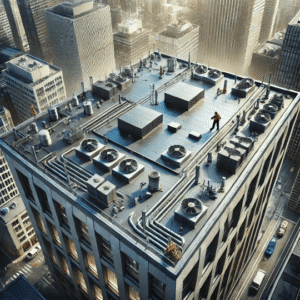
If you’ve ever had work done on your home’s roof, you might think everything is identical for your business’s roof. However, commercial roofs often require unique maintenance strategies compared to residential roofs — mostly because commercial roofs are so often flat whereas residential roofs are mostly pitched. That means water pooling is far more likely to be an issue for commercial roofs. If that’s an issue for your roof, check out our dedicated guide to improving commercial roof drainage in order to combat pooling.
The larger size of many commercial buildings also means structural problems are more likely to be a problem.
Make the right choice for your roof — and your budget

Deciding when to repair or replace a roof can save commercial property owners thousands of dollars while ensuring long-term structural integrity. If your roof is structurally sound but aging, restoration and application of a cool-roof coating is often the best financial decision. However, if extensive damage is present, a replacement may be necessary.
Get expert guidance before making your decision. Schedule a free roof inspection with Troyer Commercial Roofing to determine whether a roof restoration can extend your roof’s life or if a full replacement is the best option.