
Florida’s roofing laws are strict, and for good reason. Between hurricanes, heat, and heavy rain, commercial roofing systems face constant stress. That’s why the state requires roofing contractors to be licensed. For business owners and property managers, understanding these licensing laws isn’t just about ticking a legal box — it’s about protecting your investment, tenants, and operations.
In this guide, we’ll explain Florida’s roofing license requirements, how they affect commercial projects, and why hiring a licensed contractor isn’t just smart — it’s essential.
Do roofers need to be licensed in Florida?
Yes. Florida law requires roofing contractors — especially those working on commercial projects — to hold a valid state-issued license. This is non-negotiable.
Why it matters for your business:
Hiring an unlicensed roofer could expose your organisation to legal, financial, and safety risks, including:
- Voided warranties on roofing systems and materials
- Insurance claims being denied in the event of damage or injury
- Potential code violations, fines, or forced project shutdowns
Licensed vs. unlicensed contractors:
A licensed roofer is accountable to state regulations, carries required insurance, and has proven knowledge of Florida Building Code — particularly critical for commercial compliance and permitting. Florida allows for the registration of agents who don’t have to sit any tests. However, such agents aren’t meant to do any roofing work — they’re intended to take on non-roofing-related work, such as sales.
Unfortunately, some unscrupulous roofing agents pass themselves off as contractors and then move on to other states before their clients discover leaks and other hallmarks of unprofessional roofing work.
Florida roofing license requirements
Before hiring a contractor, it’s worth knowing what’s behind that license.
To be licensed in Florida, a roofing contractor must:
- Have at least four years of verified experience (including one as a foreman)
- Pass two rigorous exams (business and finance + trade knowledge)
- Pass background checks and credit checks
- Hold general liability and workers’ compensation insurance
- Submit financial documentation
What if a contractor’s license lapses?
They’re legally barred from performing roofing work until it’s renewed — and if they continue working, your project could be flagged for violations. That can delay timelines, affect inspections, or worse — invalidate coverage and warranties.
Unlicensed contracting penalties include:
- Fines of up to $5,000 per offense
- Misdemeanor or felony charges (depending on repeat offenses)
- Full legal liability falling on the property owner in the event of damages
Types of contractor licenses in Florida
 Not all contractor licenses are created equal — especially when it comes to commercial properties.
Types of relevant licenses include:
- Certified Roofing Contractor: Licensed to work anywhere in Florida
- Registered Roofing Contractor: Approved only in specific localities
- General Contractor: Broad construction authority, but may not self-perform roofing unless separately licensed
Commercial roofing licence scope:
A certified roofing contractor can legally install, maintain, and repair roofing systems on large-scale structures, including warehouses, office buildings, retail centres, and industrial facilities.
Why this matters:
Hiring a contractor without the correct classification can delay permit approvals or create issues with inspections — especially if work exceeds the scope of their license.
Roofing permits and local compliance
In Florida, permits are almost always required for commercial roofing work, especially for re-roofing, major repairs, or any structural alterations.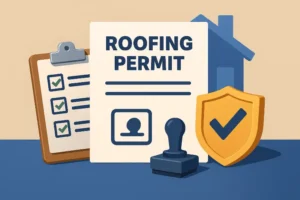
Who is responsible for securing the permit?
The licensed contractor. If a permit isn’t pulled — or is filed under the wrong license — your project could be halted, or worse, deemed illegal.
Key compliance considerations for commercial properties:
- High-wind zone compliance (critical in coastal regions)
- Energy code adherence (especially for flat roofs and insulation systems)
- Fire rating and drainage considerations in multi-use facilities
Tip: Ask your contractor about their familiarity with local municipal codes. Some counties (like Miami-Dade and Broward) have their own product approval systems and different standards, so it’s important to choose either a local contractor or someone familiar with your local regulations.
License portability and reciprocity
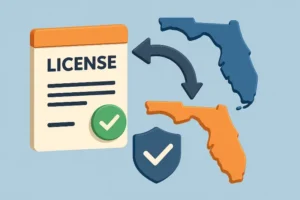 If you manage properties across state lines, you might wonder: can your Florida roofer work elsewhere? And vice versa — if you’re interested in hiring someone from across state lines, can they work on your roof in Florida?
Generally, no — not automatically.
Florida’s roofing licenses are state-specific. Some neighbouring states may allow licensure by endorsement, but most require local registration and testing.
Here’s what you need to know about licensing across borders:
- Out-of-state roofers working in Florida must apply for a Florida roofing contractor license, pass the state exams, and meet all insurance and experience requirements. Florida does not offer broad reciprocity, even for licensed contractors in other states.
- Florida roofers working in other states will usually need to obtain licensure in each state where work is being performed. While some states may offer streamlined application processes for experienced contractors, most still require local testing and documentation.
- National firms or multi-state operators should ensure their roofing vendors are licensed in each location where work is conducted. Relying on a “one-size-fits-all” license can result in insurance issues, denied permits, or legal challenges — particularly for larger commercial installations.
Florida reciprocity fast facts:
- No broad reciprocity for roofing licenses
- Some exceptions apply (usually for military or out-of-state contractors relocating)
- Licensing standards in Florida are stricter than most, particularly due to storm risk
Bottom line for property managers:
Always verify that your contractor holds an active, appropriate license in the state where the property is located. Even reputable firms can run into trouble if their paperwork doesn’t meet local standards — and that risk could ultimately land on you.
Why hiring a licensed roofer matters
For commercial projects, hiring a licensed roofer isn’t just a box to check — it’s a business safeguard.
Key advantages of working with a licensed contractor:
- Insurance coverage: Protects your property and tenants from accidents and property damage
- Warranty eligibility: Manufacturers often require licensed installation to validate warranties
- Post-installation support: Licensed contractors are more likely to offer maintenance plans and honour warranty calls
- Code compliance assurance: Ensures that your investment passes inspections and meets local and state building regulations
What if you hire a ‘roofing rep’ instead?
Sales agents or ‘project consultants’ are not qualified roofing contractors. If you sign with someone who isn’t directly licensed, you could end up with work subcontracted to parties with unknown qualifications or coverage — a major liability.
Safeguard your investment by choosing a Florida-based, licensed roofing expert
 When it comes to protecting a commercial property in Florida, roofing isn’t something to gamble on. Hiring a licensed contractor is the best way to ensure your building stays compliant, your budget stays intact, and your tenants or staff stay safe.
Always check your contractor’s license through the Florida DBPR license portal before work begins. The site will tell you who a license belongs to, so you can be sure the person you’re dealing with really is a fully licensed roofing professional. Our detailed guide explains how to investigate your roofing contractor more thoroughly.
Need a licensed, commercial-grade roofing partner? Troyer Commercial Roofing has you covered. Let’s talk about your next project — and how we can protect your building from the top down.