
-
Seamless Coverage:
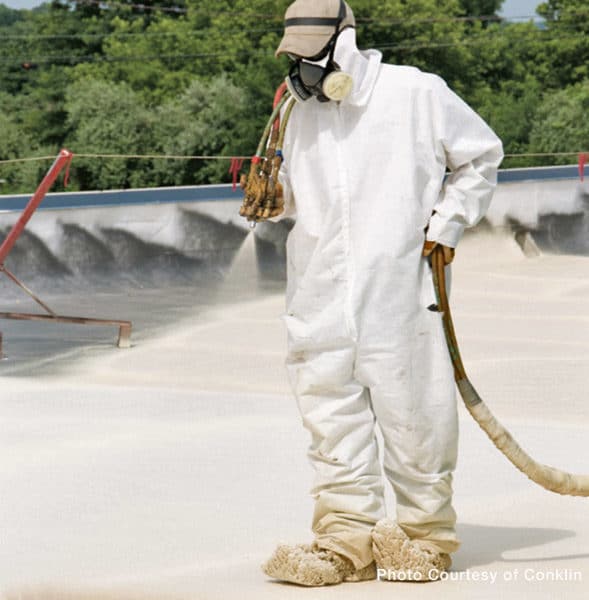
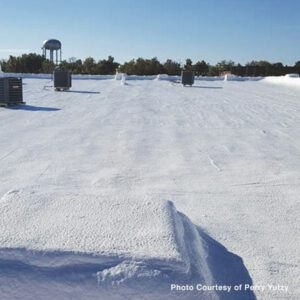
Spray Polyurethane Foam (SPF) roofing delivers impeccable coverage through its seamless application process. Unlike traditional roofing materials, SPF is sprayed onto the roof’s surface as a liquid. It expands and cures to form a continuous, seamless layer. This seamless membrane adheres tightly to the substrate, eliminating the need for joints and seams where leaks commonly occur. SPf creates a unified barrier across the entire roof. Henceforth, this ensures unmatched protection against water infiltration, weathering, and UV radiation. The seamless coverage provided by this roofing not only enhances durability but also minimizes maintenance requirements. As a result, a long-lasting and reliable roofing solution is produced.
-
Excellent Insulation:
Spray Polyurethane Foam roofing stands out for its exceptional insulation properties, offering unparalleled energy efficiency benefits. The insulation barrier created through its seamless coverage effectively prevents heat transfer. As a result, this effective insulation minimizes indoor temperature fluctuations and reduces the workload on HVAC systems. SPF roofing’s high R-value ensures superior thermal resistance, keeping buildings cooler in summer and warmer in winter. By significantly reducing heating and cooling demands, spray polyurethane foam roofing not only enhances occupant comfort but also leads to substantial energy savings and lower utility costs over the long term.
-
Lightweight:
SPF roofing offers the distinct advantage of being lightweight, presenting various benefits for both installation and structural integrity. Its lightweight nature minimizes stress on the building’s structure. Because of this, it reduces the need for additional structural support and potentially lowers construction costs. Additionally, the ease of application makes SPF roofing suitable for a wide range of roof shapes and configurations. Such roof shapes include irregular surfaces and those with protrusions. This versatility streamlines the installation process, leading to faster project completion times. Moreover, the lightweight properties of this roofing contribute to its energy efficiency, as it imposes less load on the building, further enhancing its sustainability profile.
-
Versatility:
Spray Polyurethane Foam roofing showcases remarkable versatility, catering to diverse architectural needs and challenges. Its application flexibility allows it to conform seamlessly to various roof shapes, including irregular surfaces and structures with protrusions. This adaptability ensures comprehensive coverage and effective sealing, irrespective of the roof’s complexity. SPF roofing’s versatility extends beyond its application, as it can be used in both new construction and roof restoration projects. Whether applied over concrete, metal, or existing roofing materials, SPF seamlessly integrates, providing a unified protective barrier. Such versatility not only enhances installation efficiency but also ensures optimal performance, making spray polyurethane foam roofing an ideal choice for a wide range of commercial and industrial buildings.
-
Durability:
Spray Polyurethane Foam roofing epitomizes durability, offering long-lasting protection against various environmental stressors. Its seamless, monolithic membrane forms a resilient barrier, resistant to water infiltration, UV radiation, and extreme weather conditions. SPF’s ability to expand and contract with the building’s movements prevents cracking and splitting, ensuring structural integrity over time. With proper installation and maintenance, SPF roofing can withstand the rigors of harsh climates and heavy foot traffic, maintaining its efficacy for decades. This durability translates into cost savings through reduced repair and replacement needs, making spray polyurethane foam roofing a reliable and sustainable choice for commercial and industrial applications.
-
Sustainability:
Spray Polyurethane Foam roofing epitomizes sustainability, offering numerous environmental benefits throughout its lifecycle. SPF’s seamless application reduces energy consumption by providing superior insulation and lowering heating and cooling demands in buildings. Additionally, these roofing materials can be sourced with renewable or recycled content, minimizing environmental impact. Its durability ensures longevity, reducing the need for frequent replacements and conserving resources. Moreover, its lightweight nature reduces transportation emissions and minimizes strain on building structures. As an energy-efficient, long-lasting roofing solution, SPF contributes to green building initiatives and can qualify for LEED certification, promoting environmental responsibility and resilience in construction practices.
-
Cost-Effectiveness:
Spray polyurethane foam roofing offers cost-effectiveness through various avenues. Its seamless application minimizes the risk of leaks and subsequent repair costs. Superior insulation properties reduce heating and cooling expenses, leading to long-term energy savings. SPF’s durability ensures fewer replacements, lowering lifecycle costs. Additionally, its lightweight design reduces structural stress and installation time, cutting labor expenses. Many of these roofing systems qualify for tax incentives and rebates, further reducing initial costs. Overall, spray polyurethane foam roofing’s blend of durability, energy efficiency, low maintenance, and potential financial incentives makes it a highly cost-effective solution for commercial and industrial buildings, delivering both short-term savings and long-term value.
-
Waterproofing:
Spray Polyurethane Foam roofing excels in waterproofing, forming a seamless, impermeable barrier over the entire roof surface. This monolithic membrane effectively prevents water infiltration, eliminating the risk of leaks and water damage to the building’s interior. By creating a watertight seal, spray polyurethane foam roofing safeguards valuable assets, equipment, and inventory housed within the building. The absence of seams and joints reduces maintenance requirements and the likelihood of costly repairs associated with water intrusion. Additionally, its waterproofing capabilities contribute to the structural integrity of the roof, prolonging its lifespan and ensuring long-term protection against moisture-related issues.
Overall, spray polyurethane foam roofing offers a combination of insulation performance, durability, versatility, and cost-effectiveness that makes it an attractive option for many commercial and industrial roofing applications. However, it’s essential to ensure that SPF roofing is installed by trained professionals to achieve optimal results and longevity.
Downsides of SPF Roofing
While Spray Polyurethane Foam roofing offers numerous advantages, it’s essential to consider some potential downsides:
-
Initial Cost:
The upfront cost of SPF roofing can be higher compared to traditional roofing materials, which may deter some property owners with budget constraints.
-
Installation Complexity:
Proper installation of SPF roofing requires specialized equipment and trained professionals. Improper installation can lead to performance issues and require costly repairs. Henceforth, ensure you hire an experienced commercial roofing expert who can get the job done.
-
Environmental Concerns:
Some formulations of SPF contain chemicals that can release volatile organic compounds (VOCs) during installation, posing potential health and environmental risks. To avoid overspray, trained professionals can ensure any risks are minimized, and the job is completed at the right time considering the weather conditions.
-
UV Degradation:
SPF roofing may be susceptible to UV degradation over time if not adequately protected by a reflective coating or other UV-resistant materials. Luckily, Conklin’s white reflective “cool roof” coatings reflect over 80% of UV radiation, reducing roof surface temperature by as much as 80°F
-
Maintenance Requirements:
While SPF roofing generally requires minimal maintenance, periodic inspections and recoating may be necessary to maintain its performance and extend its lifespan. This is the case for any commercial roofing system, and proper commercial roof maintenance practices should be routine to avoid costly roof repairs.
-
Compatibility Issues:
Spray polyurethane foam roofing may not be compatible with certain roof structures or substrates, requiring additional preparation or reinforcement before installation. To ensure your roof has all the protection it needs, contact a professional commercial roofing contractor for a roof inspection.
Despite these downsides, SPF roofing remains popular for many commercial and industrial applications due to its energy efficiency, durability, and long-term cost savings. However, carefully considering these factors is crucial when determining if spray polyurethane foam roofing is the right choice for a particular project.