
When a commercial property sits vacant due to roofing issues, the cost goes far beyond repairs. Lost leasing opportunities, delayed income, and ongoing uncertainty can quickly turn a manageable problem into a serious financial concern.
In this case study, we’ll show how the Troyer Commercial Roofing team helped Vorbeck Equities restore the roof of a Sarasota commercial property, resolving persistent issues that had prevented the building from being leased. By using a targeted commercial metal roof restoration approach, the team was able to eliminate leaks, stabilize the roof, and return the property to a lease-ready condition, all within a tight timeframe.
The real problem behind this commercial roof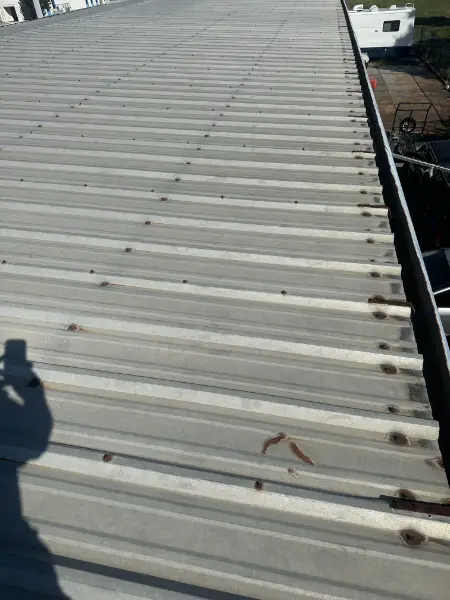
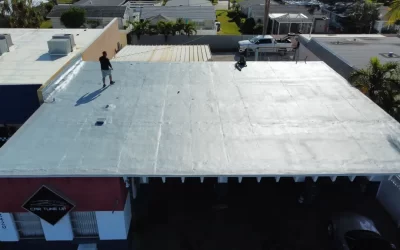
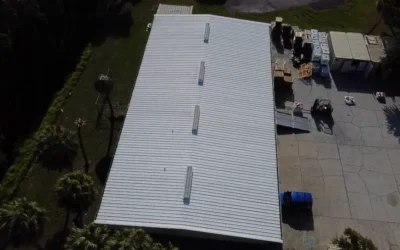
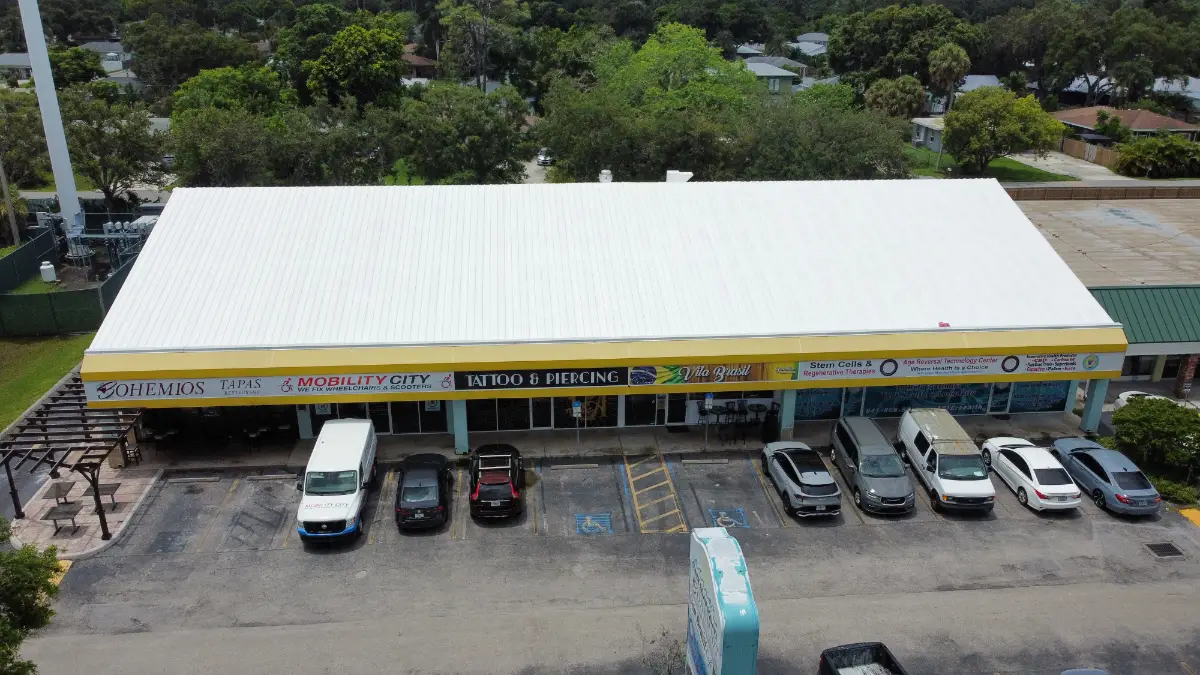
This project involved a commercial property in Sarasota, Florida, managed by Vorbeck Equities, with Julia Hixon overseeing the project. The building featured an approximately 11,000-square-foot metal roof that had begun to show signs of failure.
Over time, several issues had developed that are common to this kind of roof:
- Active leaks across several sections of the roof
- Screws backing out, creating multiple potential entry points for water
- Early-stage rust forming on the metal surface
While these issues had only been present for around a year, they had already begun to impact the building in a meaningful way.
Most notably, the condition of the roof meant the property could not be leased.
For commercial property owners and managers, this is where roofing problems move beyond maintenance and into business risk. Even relatively minor issues such as loose fasteners or small leaks can raise concerns for potential tenants, delay occupancy, and ultimately affect revenue.
What’s more, in Florida’s climate, these problems rarely stay minor for long. Heat, humidity, and frequent rain can accelerate deterioration, turning manageable defects into more widespread failures if they aren’t addressed properly.
At this point, the business’s priority wasn’t just fixing the roof. It was restoring the building to a condition where it could confidently be leased again.
Why restoration was the right decision
When a commercial roof begins to fail, especially on a property that’s sitting vacant, the natural instinct is often to consider full replacement. For property owners and managers, that can feel like the safest way to remove uncertainty and make the building lease-ready again. And since the building’s vacant, it doesn’t seem like replacing the roof will disturb anyone.
However, in this case, a full replacement wasn’t the most practical or cost-effective option.
After assessing the roof, the Troyer Commercial Roofing team determined that the underlying structure was still sound. The core issue wasn’t structural failure, but surface-level deterioration, including loose fasteners, minor rust, and multiple leak points. These are exactly the types of problems that a targeted commercial metal roof restoration is designed to resolve.
Choosing full replacement would have introduced several challenges:
- Higher upfront cost: Removing and replacing an 11,000-square-foot roof involves significant material, labor, and disposal expenses
- Extended timeline: Roof replacement projects often take significantly longer to complete, delaying the point at which the property can be leased
- Increased disruption: In a vacant building, larger-scale works may not affect tenants or stored goods, but they can slow down other preparations needed to make the building tenant-ready by complicating access and create additional safety considerations
For a property that was already unable to generate income, these factors mattered.
Instead, restoration offered a more strategic solution. By addressing the specific failure points and applying a complete coating system, the Troyer Commercial Roofing team could resolve the issues efficiently and return the roof to a reliable, watertight condition.
Just as importantly, the project could be completed within a short timeframe. Work began and finished in December 2023, allowing the property to move much closer to being lease-ready without the delays typically associated with full replacement. Plus, the process and materials we used extended the life of the roof significantly, so Julia didn’t have to worry that she’d be back in the same position again in the near future.
This is a key consideration for commercial property owners. When roofing issues are preventing leasing or occupancy, the best solution isn’t always the most extensive one. It’s the one that restores performance quickly, controls costs, and supports the broader business goal, which in this case was getting the building back on the market.
The roof restoration process
Once restoration was confirmed as the right approach, the Troyer Commercial Roofing team carried out the project using a structured, system-based process designed to resolve the existing issues and prevent them from returning.
Work began and was completed in December 2023, with a focused three-person crew delivering the project efficiently and with minimal disruption.
Each stage of the process addressed a specific aspect of the roof’s performance, from surface preparation through to final protection.
Step 1: Cleaning and surface preparation
We began the restoration process with the Conklin MR System, a proven commercial roof coating system designed specifically for metal roof restoration. Each high quality product in the MR System is designed to work together as part of a fully integrated roofing system with results that are greater than the sum of the individual parts. That’s why this is one of the systems we specialize in for metal roof restoration.
The first step involved a thorough pressure wash using Rust Off cleaner to remove dirt, oxidation, and contaminants from the roof surface.
This preparation stage is critical. Without it, coatings cannot bond effectively, which can lead to premature failure.
Step 2: Securing the roof system
Next, the team addressed one of the primary causes of the leaks: mechanical movement within the roof system.
All loose screws were tightened to stabilize the metal panels and eliminate gaps where water could enter. This step is particularly important on metal roofs, where expansion and contraction can cause fasteners to loosen over time.
Step 3: Treating rust and reinforcing vulnerable areas
With the roof properly prepared and secured, the team moved into the next phase of the Conklin MR System.
We applied a rust-inhibiting primer (Conklin Encase) across the roof to stop further deterioration and create a protective base for the coating system.
We also reinforced critical areas, such as seams, Spunflex fabric embedded in Benchmark basecoat. This helps strengthen the most vulnerable parts of the roof, where leaks are most likely to develop.
Our team was also meticulous about individually sealing every fastener using Kwik Caulk to prevent water penetration at these small but high-risk points.
Step 4: Applying the protective coating system
With preparation and repairs complete, the final stage involved applying the protective coating system across the entire roof surface.
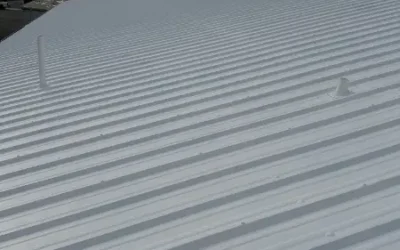
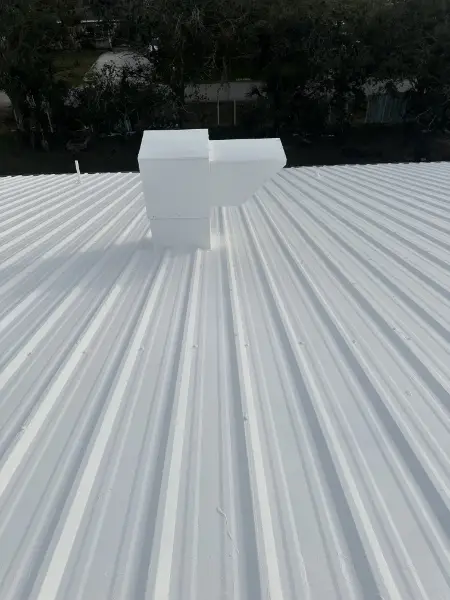
A high-performance PUMA XL topcoat was applied to create a seamless, fully adhered membrane that seals the roof and protects it from the elements.
The topcoat plays a key role in the system by:
- Sealing the roof against water intrusion
- Reflecting heat to reduce surface temperatures
- Protecting the underlying layers from UV exposure and ongoing wear
The result is a continuous, durable roofing system designed to perform reliably in Florida’s demanding climate.
Project materials
As you can no doubt imagine, a large 11,000-square-foot roof requires large product volumes to complete a restoration project. In case you’re wanting to gauge how much of each product you would need for your own roof restoration, here are the materials we used across the project:
- 220 gallons of PUMA XL topcoat
- 55 gallons of Encase primer
- 55 gallons of Benchmark basecoat
- 10 gallons of Kwik Caulk
- 3 gallons of Rust Off cleaner
Why the Conklin MR System was the right choice
For this project, Lester selected the Conklin MR System because it offered a cost-effective way to restore the roof while delivering long-term performance.
Rather than relying on isolated repairs, the system creates a continuous protective layer across the entire roof surface. This approach not only resolves existing issues, but also reduces the risk of new problems developing over time.
For a commercial property that needed to become (and stay) lease-ready as quickly as possible, this combination of efficiency, durability, and cost control made it the ideal solution.
By restoring the existing roof instead of replacing it, the Troyer Commercial Roofing team was able to help the property owner move forward without unnecessary delays or expense.
The results for Vorbeck Equities
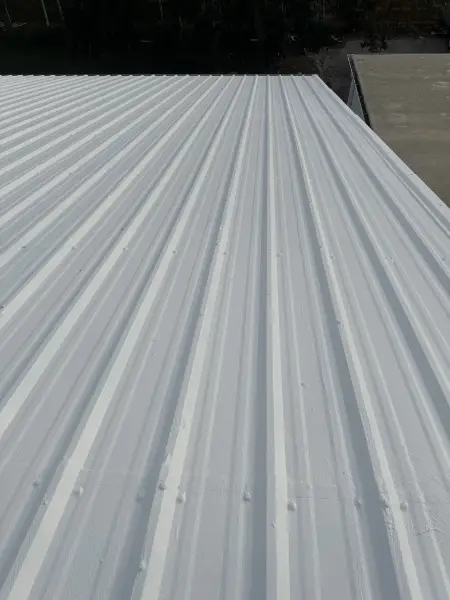 Once the restoration was complete, the impact on the property was immediate.
Most importantly, the leaks that had prevented the building from being leased were fully resolved. The roof was restored to a watertight condition, removing a key barrier to occupancy and allowing the property to move forward in the leasing process.
Beyond eliminating leaks, the project delivered several additional benefits:
- A cooler building interior: The reflective topcoat helps reduce heat absorption, creating a more comfortable environment for future tenants and supporting overall energy efficiency. This makes it easier to lease the property and can also help justify higher rents.
- Extended roof lifespan: By treating rust, reinforcing vulnerable areas, and applying a complete coating system, the existing roof was preserved and positioned for long-term performance. This means Vorbeck Equities can lease the property for longer before any future roof restoration or replacement projects need to be performed.
- Reduced ongoing emergency maintenance: With fasteners sealed, seams reinforced, and a continuous membrane in place, the likelihood of recurring issues was significantly reduced. Routine maintenance, such as keeping roof drains clear, is still required, but frequent leak repairs and similar reactive fixes are no longer a concern.
This project also reinforced the value of an ongoing relationship. Vorbeck Equities has worked with the Troyer Commercial Roofing team across multiple properties, relying on us for inspections, emergency repairs, and full restorations.
As Julia Hixon shared:
“We’ve used Lester Troyer at Troyer Commercial Roofing for several of our properties for both inspection, emergency repair and total roof restoration. He is always responsive, whether I call or text, and has proven to be fair in his pricing. Lester is definitely our ‘go-to’ when we have a roofing need on one of our commercial buildings.”
This kind of long-term trust is especially important for property managers overseeing multiple buildings. It means having a contractor who understands their portfolio, responds quickly, and consistently delivers practical, cost-effective solutions.
For commercial property owners in Florida, the ability to resolve roofing issues quickly and reliably can make a direct difference to occupancy, tenant satisfaction, and overall return on investment.
What Florida property owners can learn from this project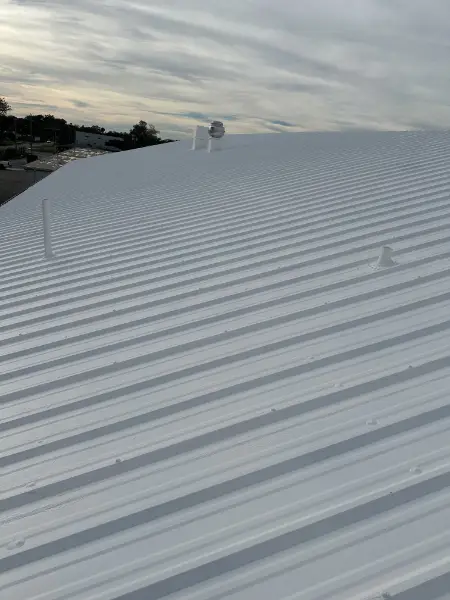
This project highlights an important lesson for commercial property owners and managers. Roofing issues aren’t just a maintenance concern, they can directly impact leasing, occupancy, and overall return on investment.
In this case, relatively common issues such as leaks, loose fasteners, and early-stage rust were enough to prevent the building from being leased. Left unresolved, those problems would likely have worsened, increasing both repair costs and lost revenue over time.
However, because the underlying roof structure was still sound, a full replacement wasn’t yet necessary.
Signs your roof may be affecting leasing potential
If you manage or own commercial property, it’s worth paying attention to early warning signs that could impact tenant confidence or delay occupancy:
- Visible leaks or water damage, since even minor leaks can raise concerns for prospective tenants and signal deeper issues
- Loose fasteners or visible wear, as these small defects can lead to ongoing problems if not addressed properly
- Early-stage rust or surface deterioration, which while often treatable, can make a property appear poorly maintained
- Uncertainty around roof condition, since if you’re unsure about the roof’s performance, it can slow down leasing decisions and negotiations
In many cases, these issues can be resolved through a targeted restoration approach, provided the roof’s structure remains intact.
Why acting early matters
In Florida’s climate, roofing problems tend to escalate quickly. Heat, humidity, and heavy rainfall can accelerate deterioration, turning manageable issues into more complex and expensive repairs.
Addressing problems early with a system-based restoration can:
- Help bring a property back to market faster
- Reduce the risk of more extensive damage
- Provide a clear, cost-effective alternative to full replacement
For property owners focused on maintaining occupancy and protecting asset value, timing can make a significant difference.
 The value of working with the right contractor
Just as important as the solution itself is the team delivering it.
At Troyer Commercial Roofing, our focus is on providing practical recommendations based on the actual condition of the roof, not defaulting to the most expensive option. This approach helps property owners make informed decisions that align with both their building’s needs and their broader business goals.
For those managing multiple properties, having a reliable roofing partner can streamline maintenance, reduce risk, and support long-term portfolio performance.
Restore performance, reduce risk, and get back to leasing faster
For commercial property owners, a failing roof can quickly become more than a maintenance issue. It can delay leasing, impact tenant confidence, and reduce the overall value of the asset.
As this project shows, the right restoration approach can resolve these challenges without the cost, disruption, and delays of full replacement.
By addressing the root causes of roof failure and applying a complete system designed for long-term performance, Troyer Commercial Roofing was able to help bring this Sarasota property back to a lease-ready condition in a matter of weeks.
If your property is experiencing leaks, visible wear, or uncertainty around roof condition, the next step is getting a clear assessment of your options. Schedule a professional inspection to find out whether a commercial metal roof restoration can help you protect your building, reduce costs, and move forward with confidence.